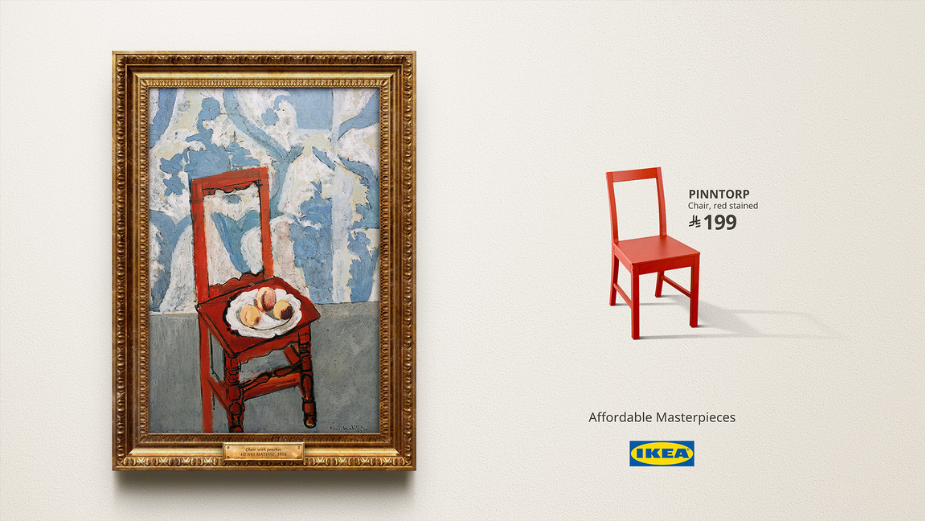
Canva launches Craft, its first in-house AI image generation model.
Canva has launched Craft, the first image generation model it has built and trained itself, aimed at design and marketing work such as ads and social posts. It went live on 22 October in Canva's Dream Lab and through a public API.
Craft was developed by Canva Research, the company's in-house AI lab. It produces images at up to 2K resolution in more than 30 preset aspect ratios as well as custom sizes, and Canva says it can render text in 55 languages. The model works in two stages: a planning model first maps out the composition, including where objects sit, their scale, the visual hierarchy and any text, and a second model then renders the image from that plan. Images can be broken into separate editable elements with Canva's Magic Layers feature.
Canva says Craft was trained on millions of human-made templates from its library, covering posters, social posts, presentations, infographics and menus, and that professional designers compared more than 25,000 image pairs against rival models during development. According to the company, Craft entered the DesignArena image leaderboard in fourth place overall and first in the People & Portraits and Landscapes & Nature categories, though such rankings move as votes build up. The API lets developers plug Craft into marketing platforms, ad builders, e-commerce sites and print services, and access through Canva's MCP server, for use by AI assistants, was listed as coming soon.
Several things are still open. No pricing for Craft has been reported, and Canva has announced two cheaper, faster versions, Craft-fast and Craft-ultrafast, without release dates. CMSWire reports that reference-image input and more advanced editing are on the roadmap but not yet available. Canva says Craft renders text in 55 languages; how it handles Arabic and right-to-left layouts is untested.
For in-house teams and small agencies in Saudi Arabia and the Gulf that already make social and ad assets in Canva, a model trained on layouts and typography could cut production time on everyday creative. Teams working in Arabic should test its text rendering before relying on it, and regional ad-tech and e-commerce platforms now have an API route to build Canva's image generation into their own products.
Why it matters
A design-trained image model inside a tool many marketing teams already use could speed up ad and social production, though its Arabic text handling is still unproven.
Related trends.

UM MENAT puts AI-generated media strategies through a human edit on Stand Against Bland Day
UM MENAT, the Omnicom-owned media agency, marked Stand Against Bland Day on 22 October under the theme "Don't Outsource the Human". Teams in six markets reworked AI-generated media strategies to show what human judgement adds.
Why it mattersAs agencies in the Gulf use AI to draft media strategies, UM MENAT is putting human review and regional knowledge forward as the part clients pay for.
UAE AI Office and Microsoft launch UAE Vibe Codes, a nationwide programme for building apps with AI
The UAE Artificial Intelligence Office has launched UAE Vibe Codes, a nationwide programme developed with Microsoft that lets people build websites and app prototypes by describing their ideas in plain language. It went live on 29 October as part of UAE Codes Day.
Why it mattersA state-backed push to teach the whole UAE public to build sites and tools with AI widens the pool of clients and staff who can prototype before briefing an agency.
Microsoft Clarity: checkout shows up in a quarter of AI agent sessions
Microsoft Clarity says checkout was recorded in 25.21% of website sessions involving AI agents, against 14.65% of human-only sessions on the same sites. The study, published on 29 October, covers more than 5.2 million sessions involving AI agents across 230,511 Clarity projects.
Why it mattersCheckout, form and booking events are what ad platforms optimise on. If agents trigger a growing share of them, conversion rates and cost-per-lead figures start mixing two kinds of visitor.