Tabby shopping survey: 43% of Saudi and UAE shoppers have used AI to help decide what to buy.
Tabby's survey of 20,999 shoppers in Saudi Arabia and the UAE finds 42.8% have used AI to help decide what to buy, though only 30% would trust it to recommend products.
By Tabby · Mar 30, 2026
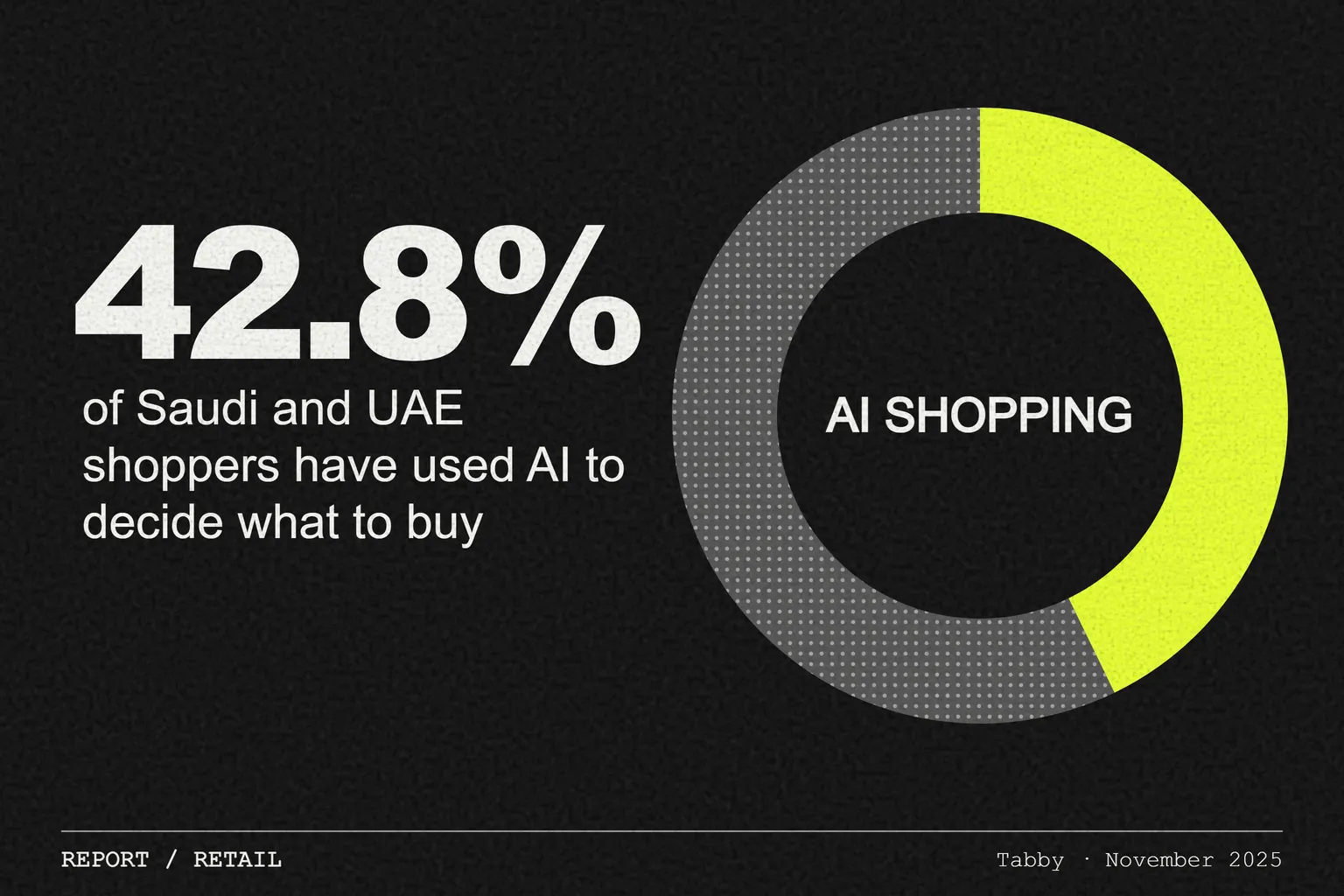
Tabby's third Ultimate Middle East Shopping Survey, subtitled Retail without excuses, finds shoppers in Saudi Arabia and the UAE moving freely between screens and stores and expecting retailers to keep up. Of the 20,999 people surveyed, 42.8% have used AI to help with shopping decisions in the past 12 months, but only 30% would trust it to recommend products.
The report also shows where the two markets differ. Shoppers in the UAE use AI more, mix online and in-store shopping more and feel more confident about their finances, while Saudi shoppers are more likely to shop only online and put more weight on payment security. Tabby, which sells flexible payments, published the report in English and Arabic on 30 March 2026.
42.8%
have used AI to help make shopping decisions in the past 12 months (UAE 47.8%, Saudi Arabia 39.5%)
30%
would trust AI to recommend products, while 43.4% say maybe
77.2%
of product discovery happens online, led by social media (31.3%)
55.3%
prefer to mix online and in-store shopping
Key findings
- AI is in the journey, but trust lags. 42.8% have used AI for shopping decisions in the past 12 months, from 51.8% of 18- to 29-year-olds down to 30.2% of those aged 50 and over. Use is higher in the UAE (47.8%) than in Saudi Arabia (39.5%). Asked whether they would trust AI to recommend products, 30% say yes, 43.4% maybe and 26.6% no, yet 68.4% would like shopping to be more personalised and efficient even if AI is involved (our sum of those who agree or completely agree).
- Discovery is digital. 77.2% of product discovery happens online, through social media (31.3%), browsing stores online (28.2%) and marketplace apps (17.8%), against 18.6% for browsing in store.
- Hybrid shopping is the norm. 55.3% prefer to mix online and in-store shopping, 37% prefer to shop only online and 7.7% only in store. The mix is more popular in the UAE (60.4%), while 41.4% of Saudi shoppers prefer online only, against 30.6% in the UAE. 68% usually or always know what they want before they enter a store.
- Quality brings shoppers back. Product quality is the top reason to return to a brand (61%), followed by promotions (50.5%) and ease of payment (32.5%). The online perks valued most are discounts (60.4%), free shipping (57%), flexible payments (42.6%) and next-day delivery (31.1%).
- Stores are judged against online. Better prices online (29.1%) and a lack of flexible payment options (21.3%) are the main reasons people avoid buying in store, and the changes they want most are the same discounts (26.3%) and the same payment options (21%) as online.
- Clarity converts. The biggest online frustrations are unclear product descriptions (18.5%), high shipping costs (17.7%) and items out of stock (15.7%). Shipping costs (17%) and hidden fees (16.2%) are among the main reasons for abandoning a cart.
- Payment priorities split the markets. At the till, speed matters most in both countries (32.2% in Saudi Arabia, 30.5% in the UAE). Saudi shoppers then put security (25.5%) well ahead of rewards (13.9%), while UAE shoppers rank rewards (22.2%) ahead of security (19.9%). 69.9% say they would avoid a retailer that didn't offer flexible payment options, in a question that named Tabby as the example.
How the research was done
Tabby collected 20,999 responses across Saudi Arabia and the UAE in November 2025, the largest sample in the survey's history. By nationality, 37% of respondents are Saudi, 12% Indian, 10% Egyptian, 10% Filipino, 6% Pakistani and 4% Emirati. By age, 26% are 18 to 29, 41% are 30 to 39, 25% are 40 to 49 and 8% are 50 or over, and 65% earn less than 10,000 riyals or dirhams a month. The report doesn't say how many respondents were in each country, how they were recruited or whether the results are weighted. Tabby sells flexible payments, and one of the payment questions names it, so those figures should be read with that interest in mind.
What it means for marketers
For Gulf retailers, the report's message is consistency. Shoppers discover products online, compare prices and payment options across channels and switch when they don't match, so a store that charges more or offers fewer ways to pay than the website loses the sale. Most of the fixes it ranks first take little effort: the full cost shown before checkout, clear product descriptions, customer reviews and clear returns policies.
The AI findings argue for tools that help people compare products, check sizes and find things quickly, and that show why something was recommended. The country differences matter as well. Tabby suggests UAE shoppers may be more open to premium positioning and rewards, and Saudi shoppers more responsive to clarity, security and value, so a single Gulf-wide checkout or offer strategy may fit neither market well.
About this report
Published by Tabby, March 2026. Free. Get the full report from Tabby
Sources
More stories.
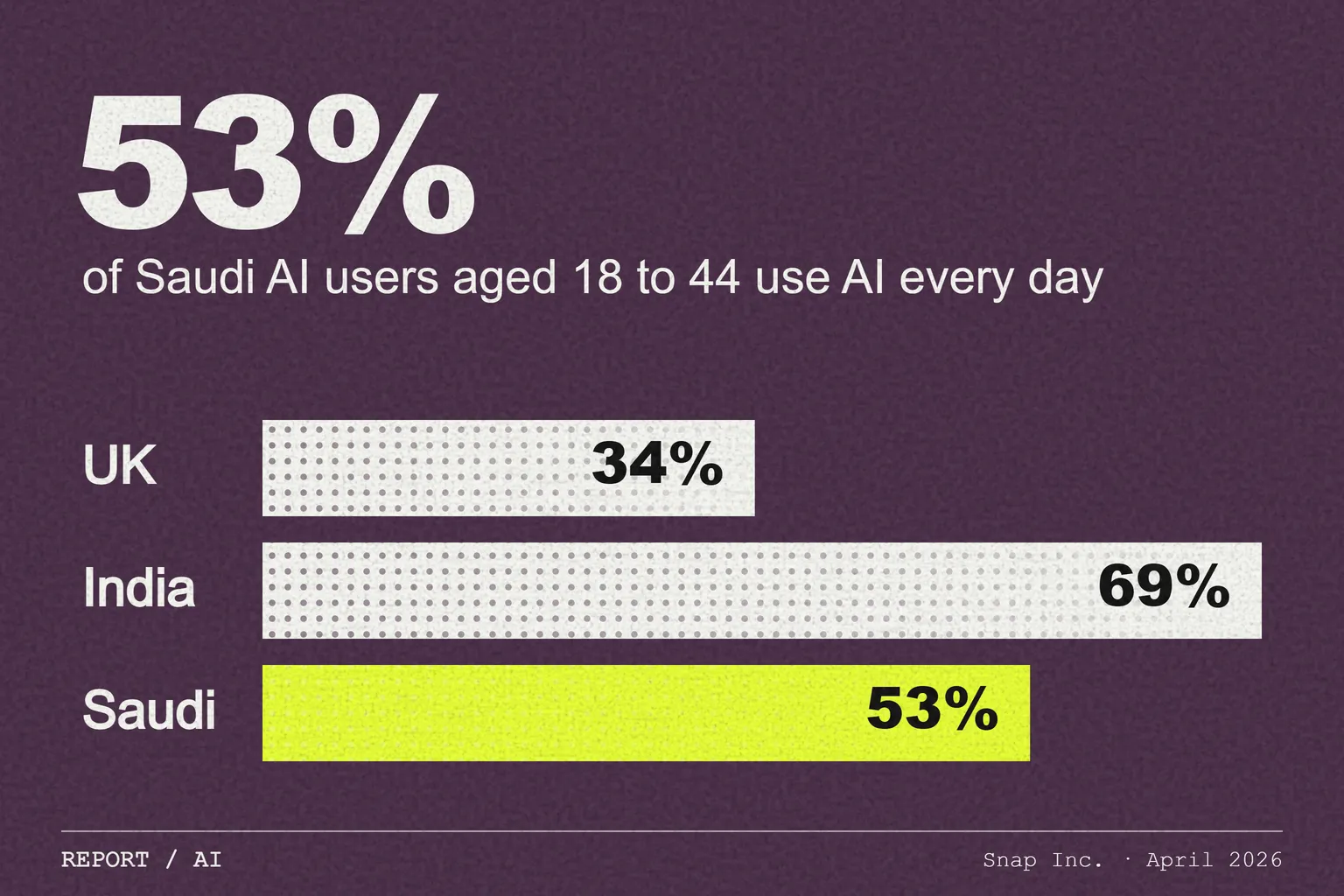
Snap, WPP and Ipsos AI report: 53% of Saudi AI users use it daily, but 65% find hyper-personalised AI ads intrusive
Ipsos surveyed 4,261 AI users aged 18 to 44 in five markets, Saudi Arabia among them, for Snap and WPP: people want AI as a social helper, but 70% find hyper-personalised AI ads intrusive.
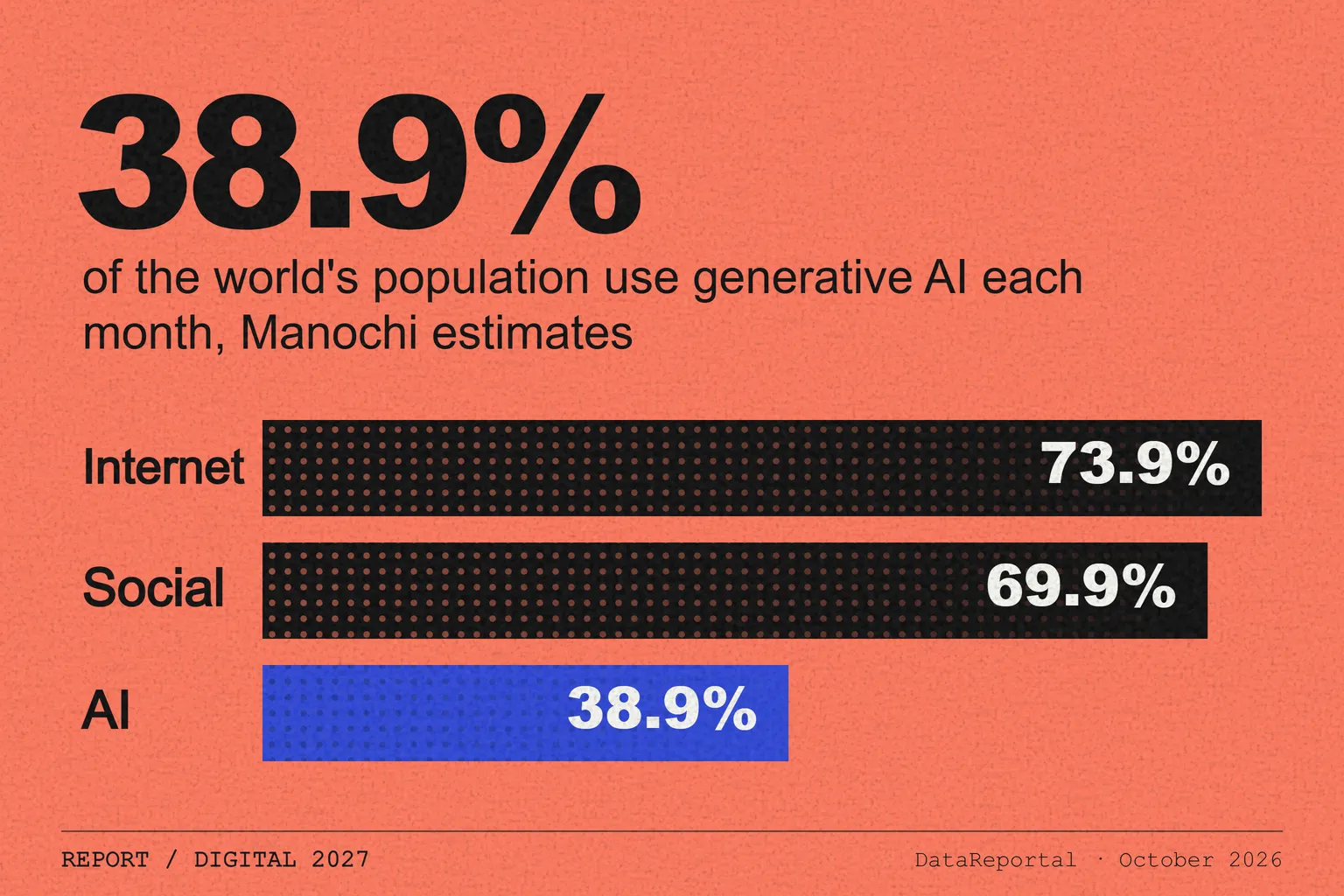
Digital 2027 Global Overview: 6.15 billion online, 3.24 billion using generative AI
DataReportal's Digital 2027 report counts 6.15 billion internet users and 5.81 billion social media user identities, while monthly users of generative AI platforms grew by more than 1.2 billion in a year.
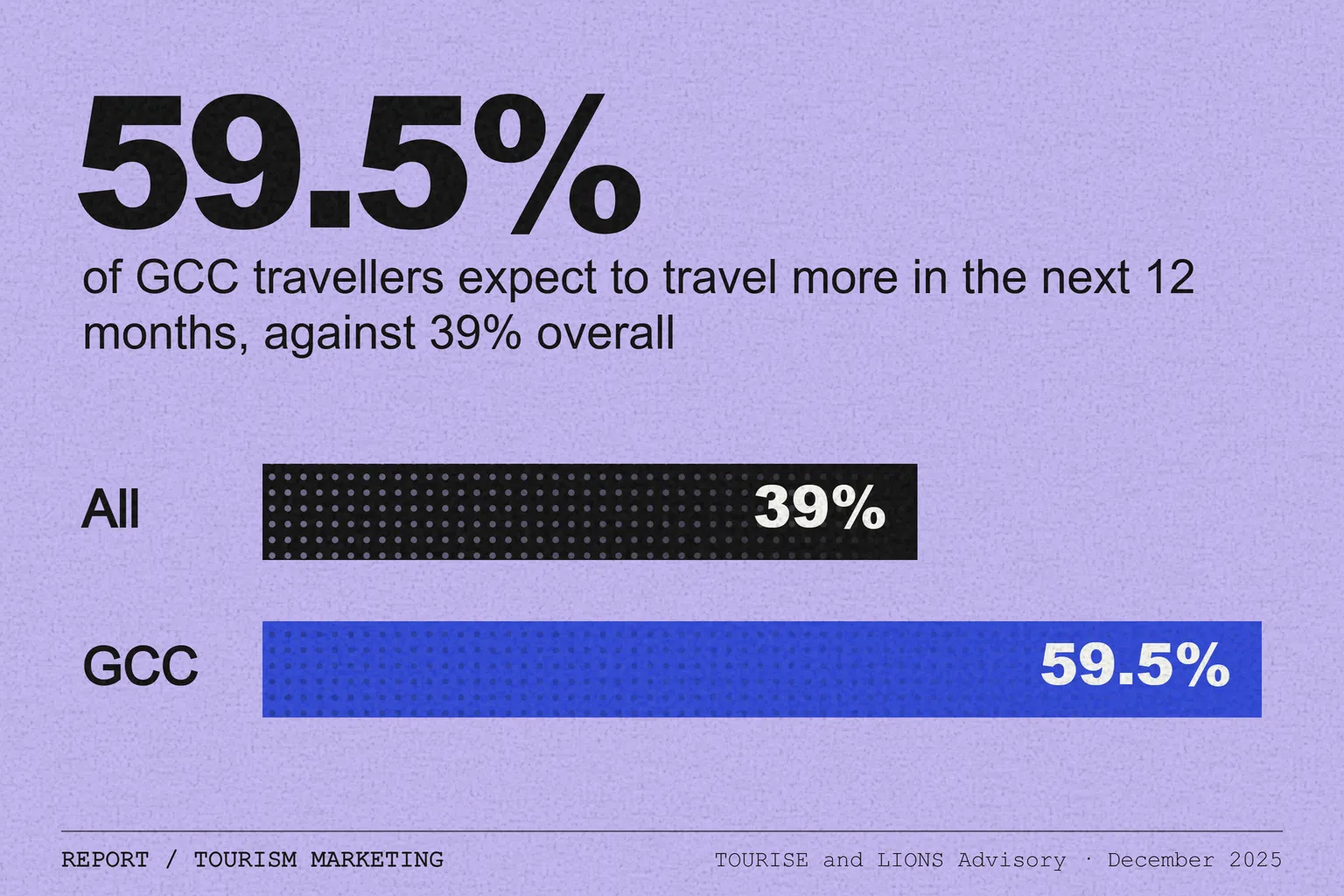
TOURISE and LIONS: travel demand is rising, but tourism ads look alike
In a survey of 8,374 international travellers for TOURISE and LIONS Advisory, 60% say many travel ads look alike and half can't recall the last one they saw.