TOURISE and LIONS: travel demand is rising, but tourism ads look alike.
In a survey of 8,374 international travellers for TOURISE and LIONS Advisory, 60% say many travel ads look alike and half can't recall the last one they saw.
By TOURISE and LIONS Advisory · Oct 21, 2026
TOURISE, the tourism platform backed by Saudi Arabia's Ministry of Tourism, has published IDEAS that travel with LIONS Advisory, the consultancy arm of LIONS, which runs Cannes Lions. The 55-page report argues that tourism marketing hasn't kept up with travellers. Demand is rising, but many of the ads people see look alike, and half of those surveyed couldn't remember the last tourism ad they saw.
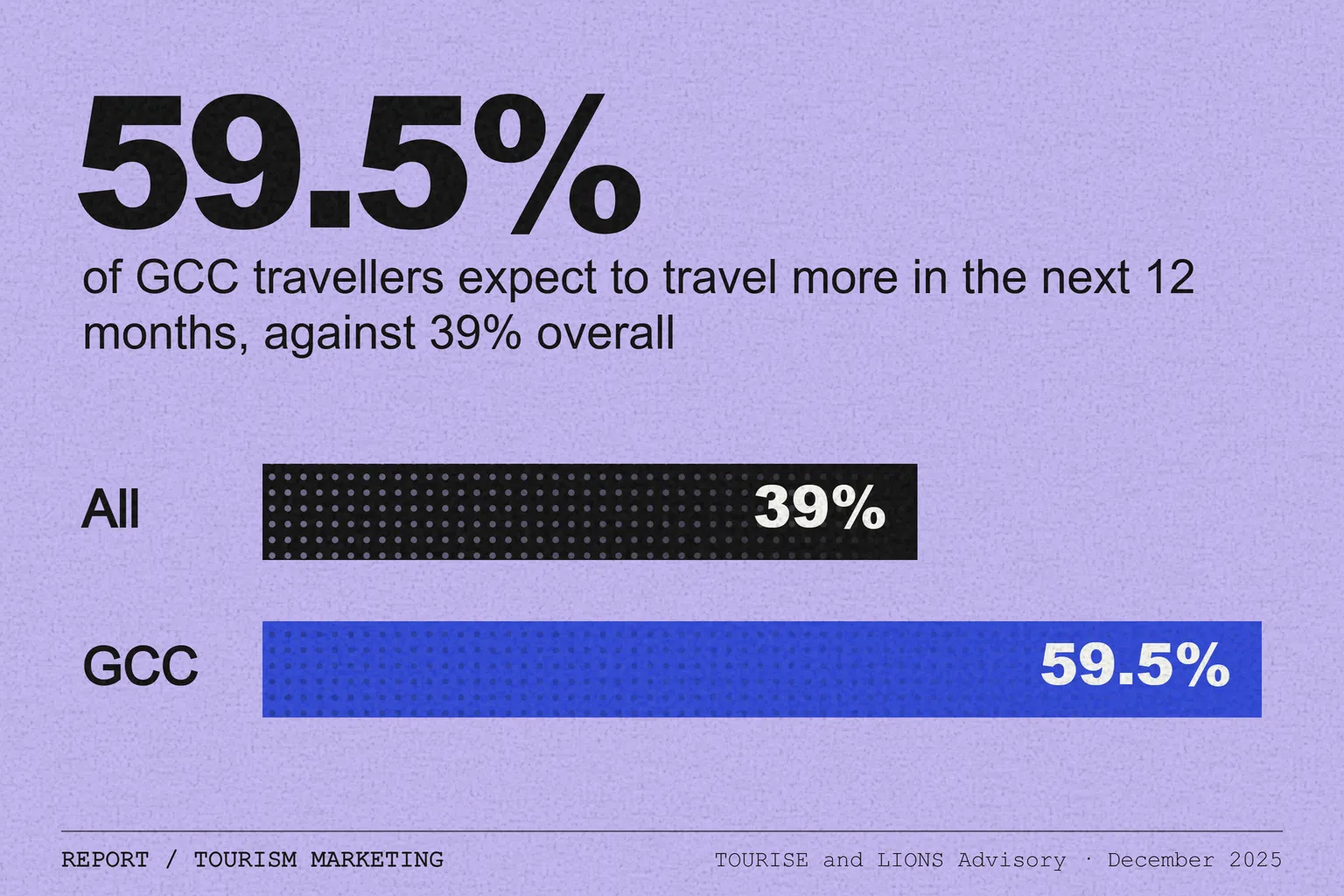
Travellers from Saudi Arabia and the UAE are among the keenest. In the survey's GCC sample, which combines the two countries, 59.5% expect to travel more in the next 12 months, against 39% across all 13 markets. Only Brazil, South Africa and India score higher.
50%
couldn't recall the last ad they saw for a tourism company or destination; another 7% weren't sure
60%
say many travel ads look similar to one another
59.5%
of GCC travellers expect to travel more in the next 12 months, against 39% overall
$11bn
more ad spend travel and transport would need in 2027 than in 2025 to regain a 3% share of global ad spend (WARC and Nielsen)
Key findings
- Demand is up. 39% expect to travel more in the next 12 months than in 2025 and 8% expect to travel less; 46% expect to spend more. Gen Z (51%) and millennials (47%) are the keenest, and by market Brazil leads at 68.2% while France trails at 18.7%.
- Ideas start in the feed. Social media and video platforms are the top source of travel inspiration, named by 33% of travellers and 45% of Gen Z, ahead of friends and family (31%) and search engines (26%). TV advertising is named by 16%.
- The ads blur together. 60% say many travel ads look similar and 43% find it hard to tell travel brands apart, views the report says held across ages and markets.
- Growth markets want real people. In the five growth markets (Brazil, South Africa, India, the GCC and China), 52% say authentic experiences and people make a tourism ad memorable, against 40% in mature markets. Surprise scores 38% against 25%.
- Trust is spread thin. 55% find it hard to find trustworthy information when planning a trip. Among 18- to 44-year-olds, 59% trust AI-generated recommendations and 52% trust creators, but the sources they trust most to confirm a choice are friends and family (83%) and official tourism websites (75%).
- AI is already in the journey. 55% use AI to plan holidays, rising to more than three in four Gen Z travellers, and 62% expect to use it more over the next year. Researching destinations tops the list of tasks they expect it to help with (46%).
- Spend hasn't caught up. On WARC and Nielsen figures, travel and transport's share of global ad spend fell from 3.59% in 2019 to an estimated 2.76% in 2025. WARC Media benchmarks show the category putting 19% of its media budget into print and outdoor, against an 11% average for other categories, and 2% into TikTok, against 3% for advertisers in general.
- AI rewards brand building. Citing research by the agency Charlie Oscar across 30 brands, reported by WARC, the report says long-term brand equity accounts for 63% of a brand's visibility in large language models, current marketing for 22% and citation volume for 11%.
The IDEAS framework
The report's answer is five drivers: Investment to stay visible as demand grows, Distinctiveness through a clear identity, Engagement through stories people choose to share, Authenticity so the marketing matches the visit, and Seamlessness, where technology removes friction without losing the human touch. Each has a case study, from Airbnb Icons and Tourism Australia's Come and Say G'day to Visit Sweden, Visit North Carolina and Southwest Airlines' shoppable flights on TikTok. Martin Nydegger, CEO of Switzerland Tourism, puts the problem bluntly in the report: on many tourism ads, he says, "you could swap the logos" and customers wouldn't notice.
How the research was done
The survey ran online in December 2025 among 8,374 people in 13 markets who had travelled abroad in the previous 12 months. Samples range from 858 in the UK to 406 in Australia; Saudi Arabia and the UAE share one sample of 850, reported as GCC. The charts credit the survey to LIONS Advisory and the Saudi Tourism Authority.
The report adds interviews with ten industry leaders, among them Ageel Alshaibani, CEO of the Saudi Tourism Authority, Accenture's David Droga and Trip.com Group CEO Jane Sun, and figures from WARC, Nielsen, KPMG, Edelman and others. It doesn't say how the 13 samples were weighted into the overall figures or give results for Saudi Arabia alone. WARC, the source of the spend and AI-visibility figures, is also part of LIONS.
What it means for marketers
For brands in the region, the GCC numbers matter most. Travellers from Saudi Arabia and the UAE are among the most eager to take more trips, and the growth-market group that includes the GCC responds more to real people and surprise than mature markets do. With 60% of travellers saying many travel ads look alike, a generic film of landscapes and skylines will struggle to stand out, however much media sits behind it.
The AI findings point the same way. If long-term brand equity drives most of what AI assistants recommend, steady brand building through creators, reviews and press will count for more than optimisation tactics. Brands that need Saudi-only figures will have to ask the survey's owners, as the published report stops at the combined GCC sample.
About this report
Published by TOURISE and LIONS Advisory, October 2026. Free. Get the full report from TOURISE
Sources
- TOURISE and LIONS Advisory, IDEAS That Travel: How Tourism Brands Win the Race for Tomorrow's Customers, 21 October 2026
- LIONS, IDEAS that travel: How tourism brands win the race for tomorrow's customers, 20 October 2026
- Business Wire, New TOURISE and LIONS Advisory Study Reveals How Creativity Creates a Commercial Advantage for Destination Growth, 21 October 2026
More stories.
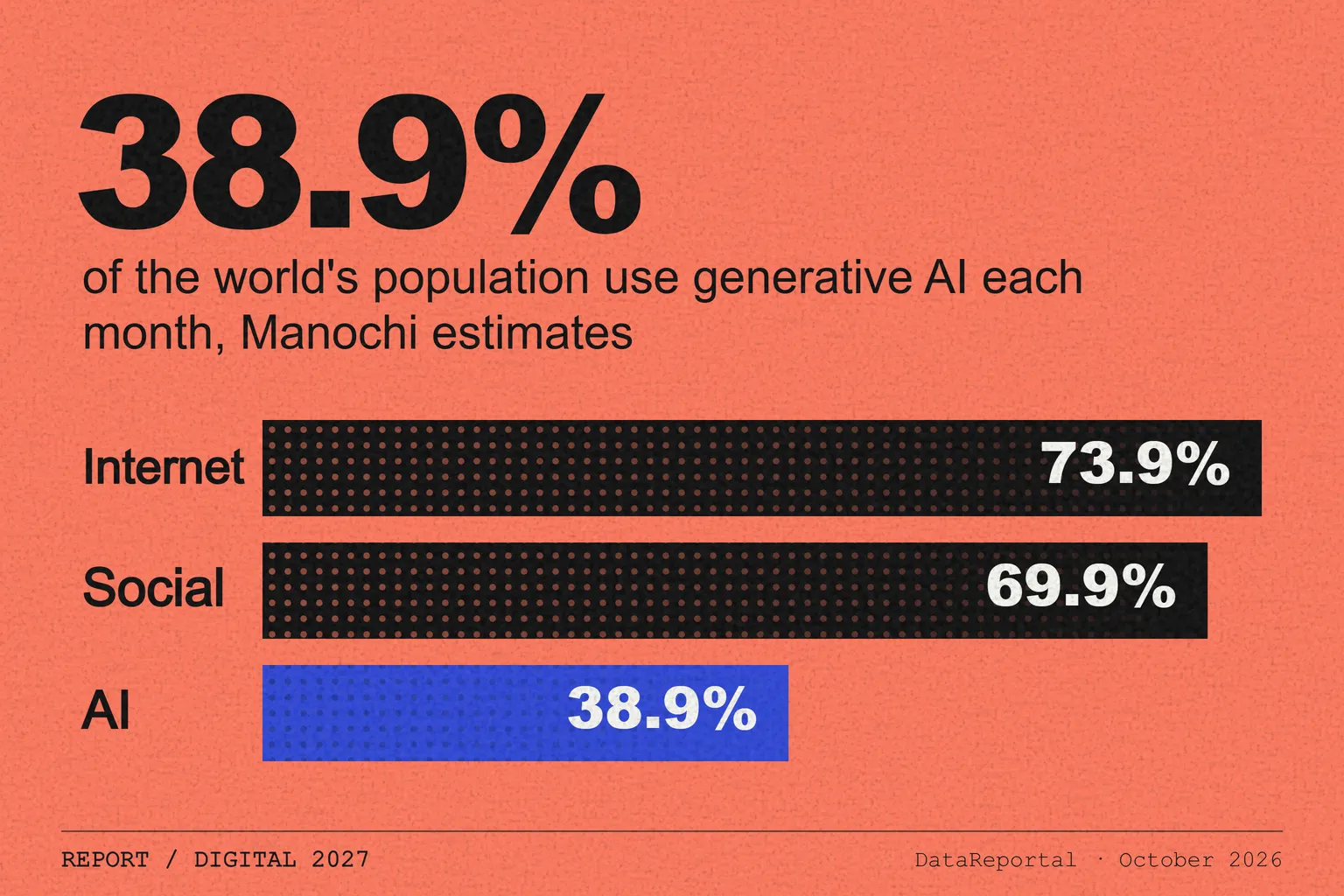
Digital 2027 Global Overview: 6.15 billion online, 3.24 billion using generative AI
DataReportal's Digital 2027 report counts 6.15 billion internet users and 5.81 billion social media user identities, while monthly users of generative AI platforms grew by more than 1.2 billion in a year.
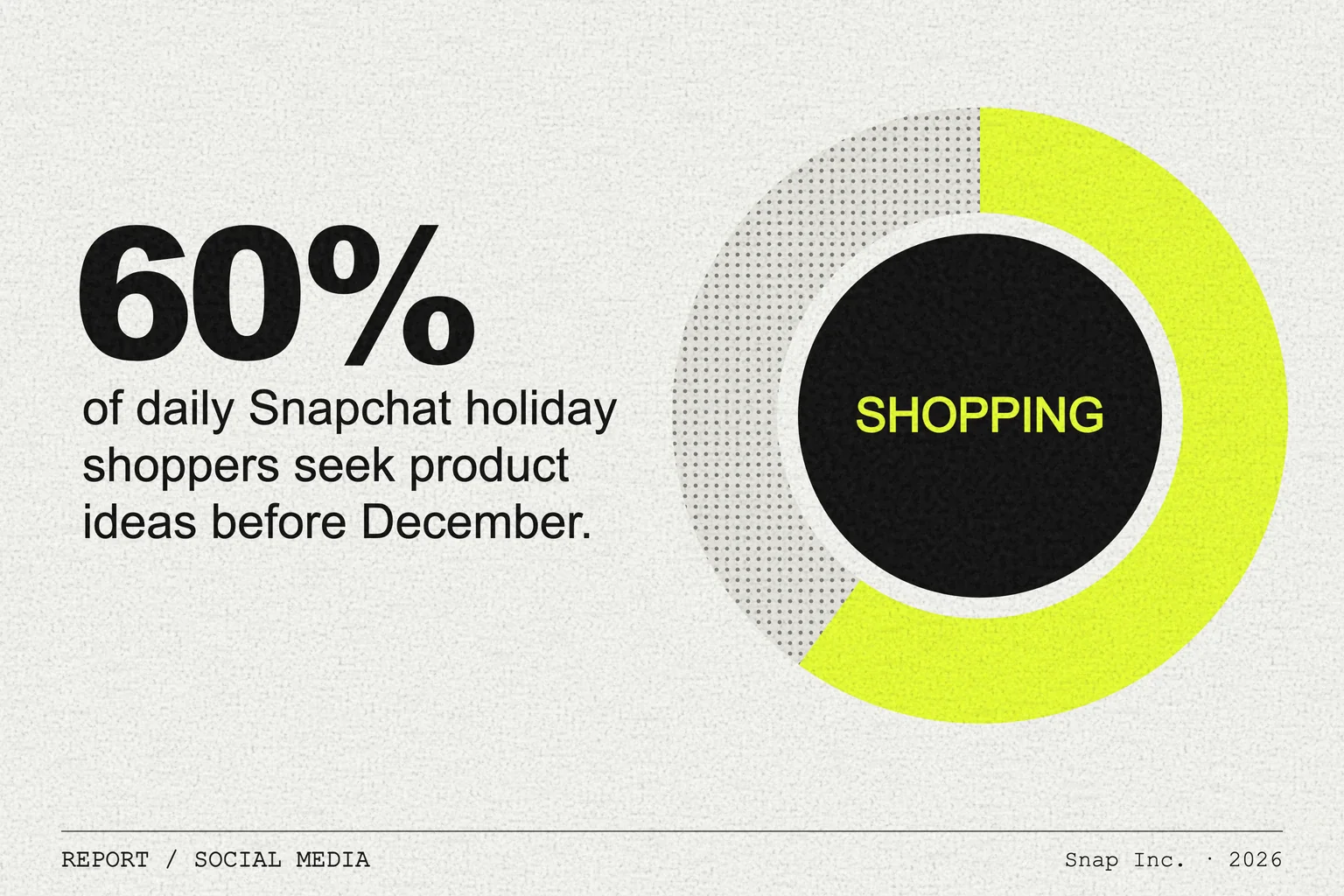
Snapchat's 2026 holiday guide: shopping decisions happen in the chat
Snap's 2026 holiday guide argues gift decisions are made in private chats, citing Snap-commissioned research on early planning, higher spend and shopping after Christmas.
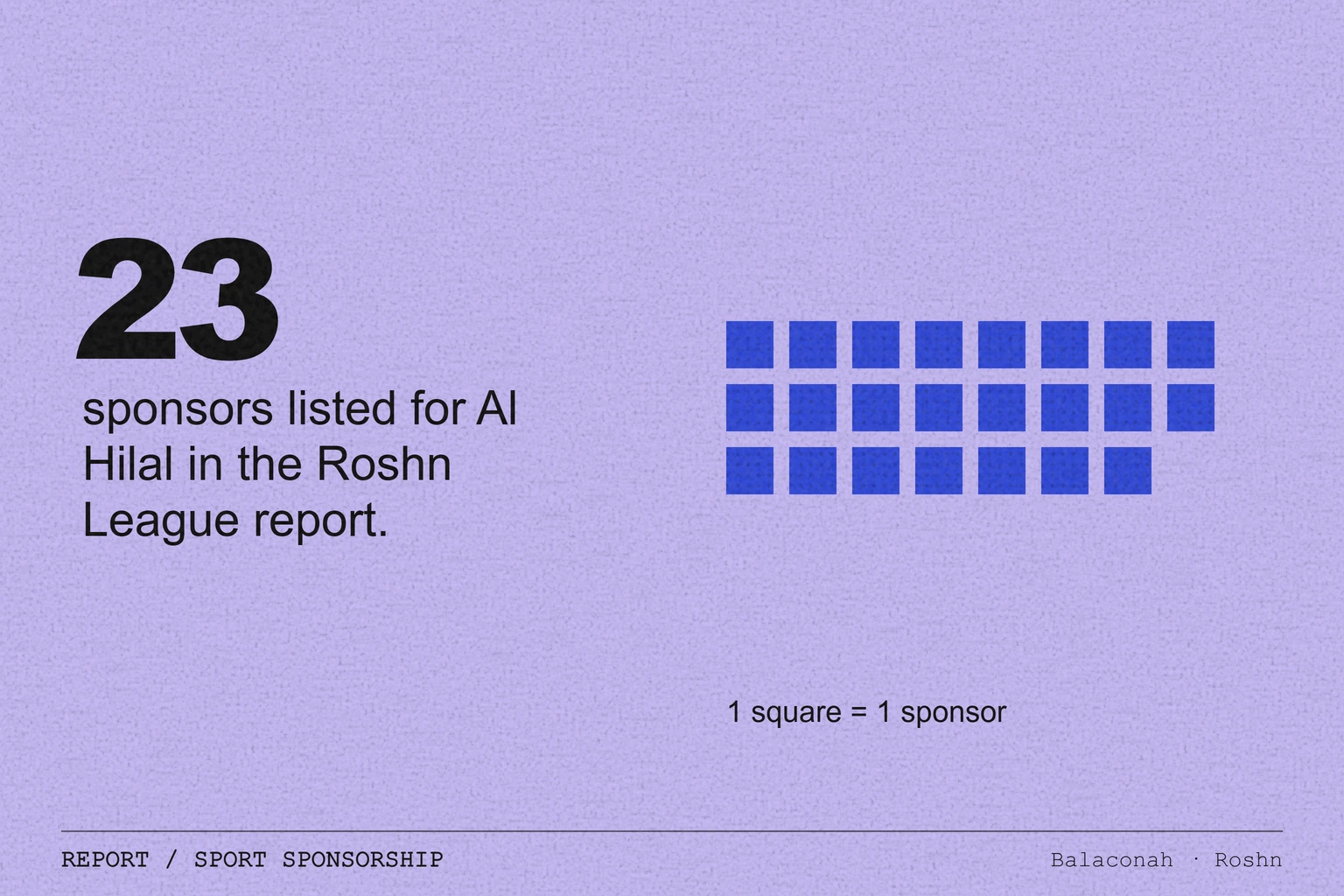
Who sponsors the Roshn League? Al Hilal has the most names
Balaconah's live report lists the sponsors of 18 Saudi Pro League clubs: Al Hilal has 23, while insurer Tameeni and water brand Berain each back ten clubs.