Snap's Maps as Social Utility report: 71% are open to visiting a place they see as a sponsored pin.
A Snap, Horizon Media and eye square study of Snap Map users aged 13 to 44 in six markets, Saudi Arabia among them, finds maps used for discovery as much as for directions.
By Snap Inc., Horizon Media and eye square · Oct 15, 2026
Maps as Social Utility, a global report from Snap Inc., Horizon Media and the research firm eye square, argues that digital maps are turning from navigation tools into places where people decide where to go. In its survey of 6,929 people aged 13 to 44 in the US, Canada, the UK, France, Germany and Saudi Arabia, all of whom answered its questions as Snap Map users, 64% use maps to actively explore new areas, about as many as use them for driving directions (62%), and 70% enjoy browsing a map with no destination in mind.
The report then tests Snap's own map ad format, Promoted Places on Snap Map, against sponsored pins on a utility map, and finds it easier to notice and better remembered. Snap co-commissioned the research with Horizon Media and sells the format, and the report gives only global figures, with no results for Saudi Arabia on its own.
64%
use maps to actively explore new areas, level with driving directions (62%)
70%
enjoy browsing a map with no destination in mind
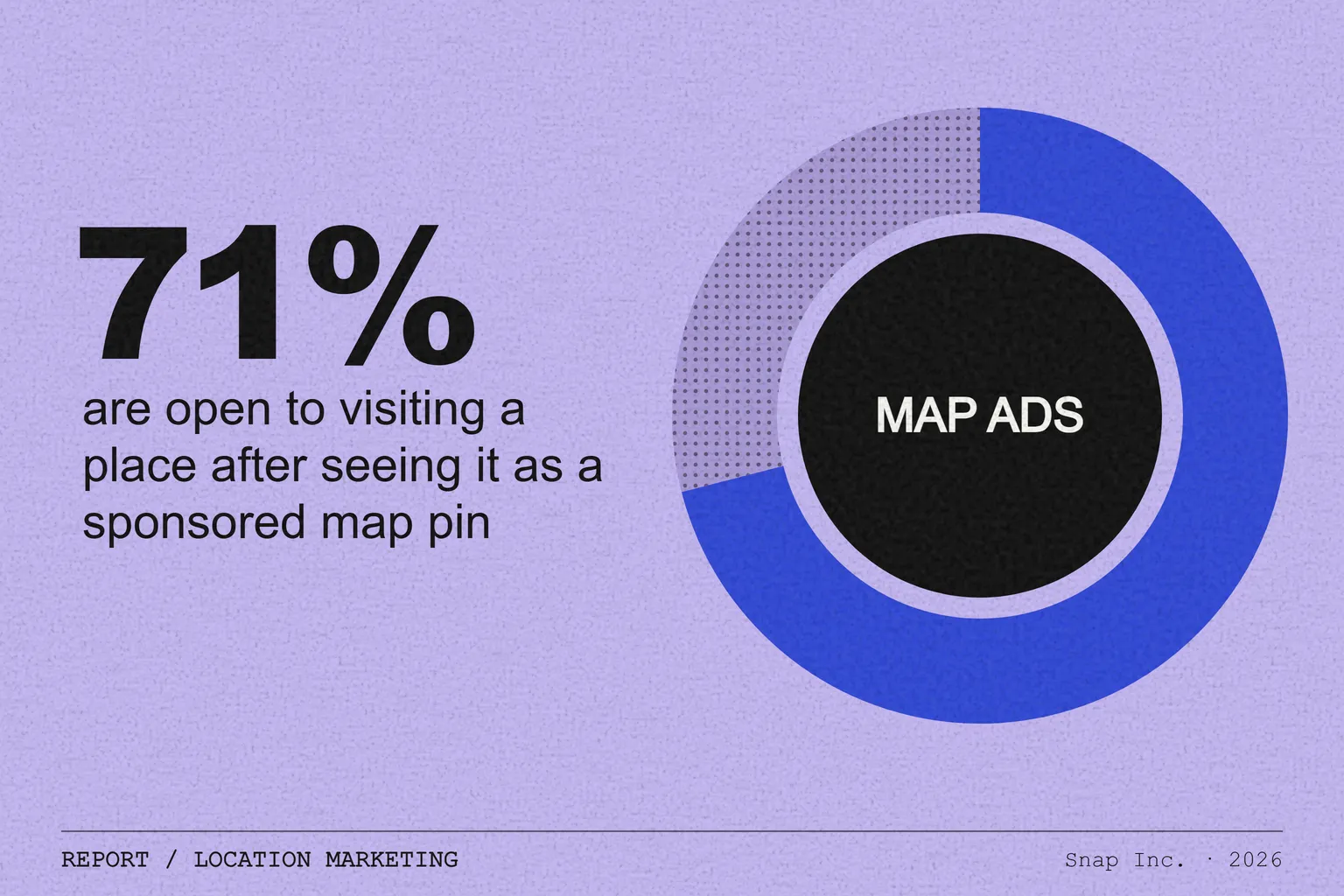
71%
are open to visiting a physical location after seeing it featured as a sponsored pin
35%
unaided ad recall for Promoted Places on Snap Map, against 7% for sponsored pins on a utility map
Key findings
- Maps are part of daily life. 71% say maps are important to their daily lives, and 55% say losing map apps would have a significant impact on them. People use maps to find restaurants and cafés (61%), when exploring a new city (42%), on holiday (41%) and at weekends (33%).
- Discovery rivals directions. 64% use maps to explore new areas and 62% for driving directions. 70% enjoy browsing with no destination in mind, 49% use maps to kill time, and 38% use them to find things to do or events.
- Saved places travel by word of mouth. People save restaurants and cafés (45%), friends' and family addresses (43%), home and work (37%), parks and shops (33% each) and travel destinations (30%). 68% send interesting places they find to others, and 57% regularly share their favourite saved locations.
- Each map has a job. 89% of Google Maps users open it strictly to get somewhere, and 83% of Apple Maps users say it makes them feel more confident. Snap Map is social: 76% consult it to see where their friends are, 73% to share their own location, 60% to see what people post about a place before going and 27% to arrange meet-ups.
- People are open to map ads. 71% are open to visiting a place after seeing it as a sponsored pin. The categories they most want to see are restaurants (44%), entertainment (36%), retail (31%) and tourist attractions (30%), and the most welcome messages are "get me there" directions (76%), practical alerts, local events and new stores nearby (73% each), and personalised recommendations (72%).
- Promoted Places beat utility-map pins. In controlled tests covering 16 brand categories, Promoted Places were easier to notice (36% against 27%) and more appealing (28% against 23%) than sponsored pins on a utility map, and unaided ad recall was 35% against 7%. Between 14 and 25 days later, unaided recall was 37% against 24%, and 43% said map discovery had led to a store visit, against 38%.
- Formats work better together. Pairing Promoted Places with Snapchat video lifted unaided ad recall to 54%, against 35% for Promoted Places alone and 12% for video alone.
How the research was done
eye square ran the study for Snap Inc. and Horizon Media in 2026 in three phases, all with people aged 13 to 44 in the six markets. A survey of 6,929 people covered how they use Google Maps, Apple Maps and Snap Map. The report calls them map users, but every respondent answered the Snap Map questions and it labels several of these figures as those of Snap users, so the survey describes Snap Map users who also use Google Maps or Apple Maps, not map users in general. Controlled tests with 11,020 people then compared Promoted Places, Snapchat video and sponsored pins on a utility map, and more than 2,100 people were surveyed again 14 to 25 days later. Differences in the ad tests are significant at the 90% confidence level. The report gives no fieldwork dates, no results by country and no name for the competing map, and the sample includes teenagers aged 13 to 17.
What it means for marketers
For retailers, restaurants and venues in Saudi Arabia, one of the six markets, the report makes a case for treating maps as a discovery channel and not just a listing: the Snap Map users it surveyed browse maps for ideas, save places and send them to friends. Snap's own playbook is to make a location easy to stumble on rather than only to search for, to encourage check-ins, saves and shares, to write map ads as a useful service rather than standard ad copy, and to use time-limited offers to turn browsing into visits.
Read the results with care. The ad tests were run by eye square for Snap, whose format won, and Horizon Media, against an unnamed competitor; the survey covers Snap Map users only; and the report doesn't show whether Saudi users behave differently from the six-market average.
About this report
Published by Snap Inc. with Horizon Media and eye square, October 2026. Free. Get the full report from Snap
Sources
More stories.
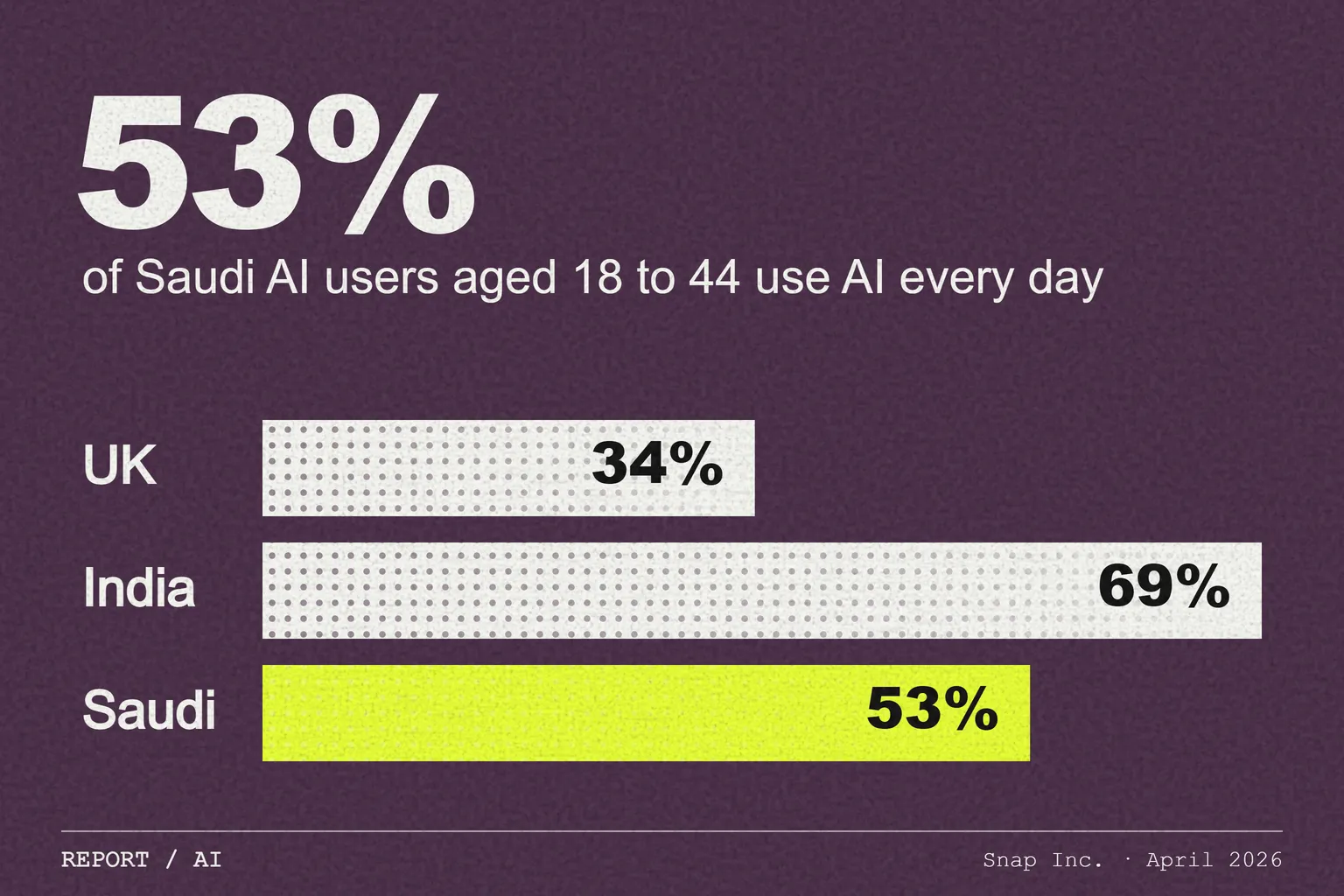
Snap, WPP and Ipsos AI report: 53% of Saudi AI users use it daily, but 65% find hyper-personalised AI ads intrusive
Ipsos surveyed 4,261 AI users aged 18 to 44 in five markets, Saudi Arabia among them, for Snap and WPP: people want AI as a social helper, but 70% find hyper-personalised AI ads intrusive.
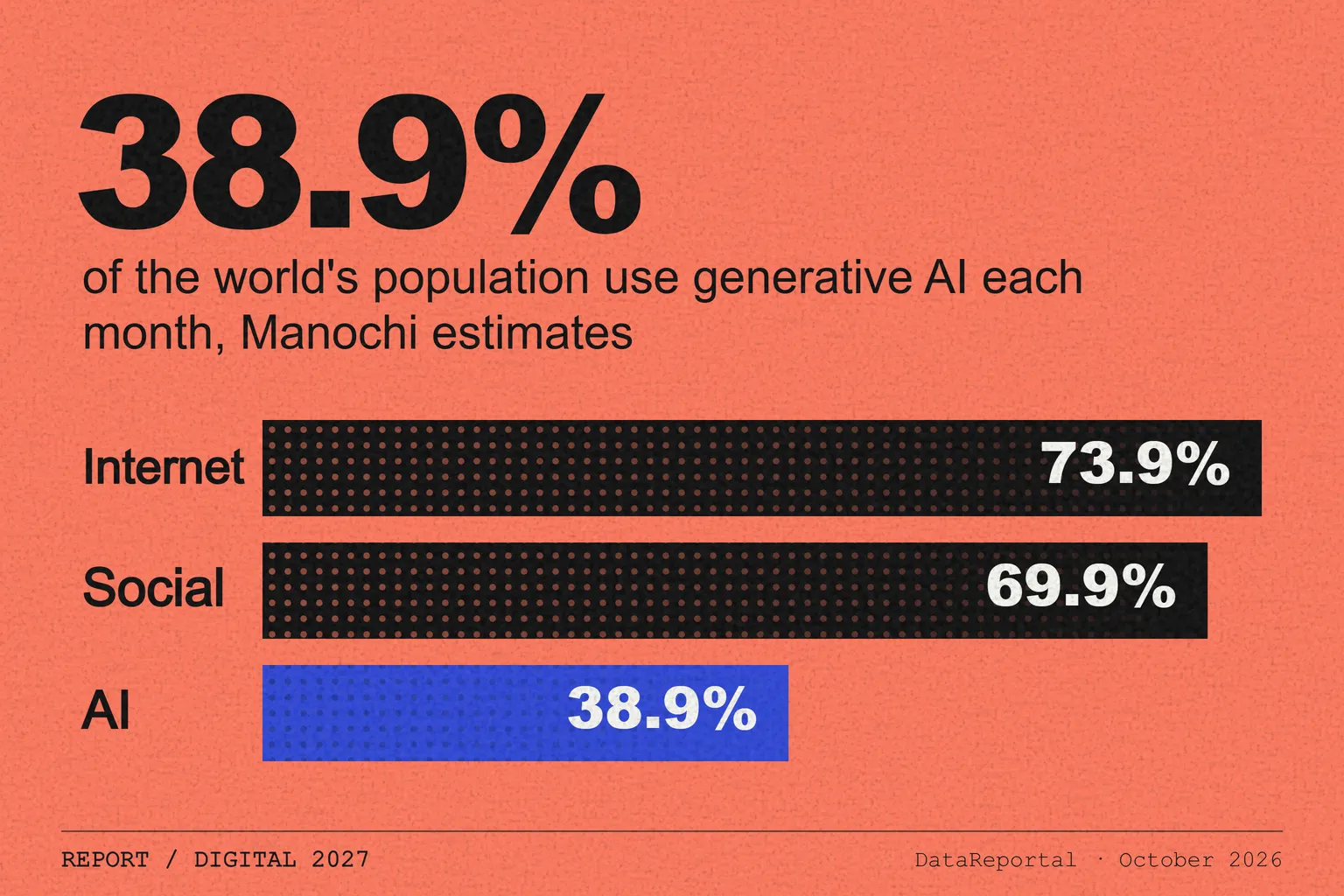
Digital 2027 Global Overview: 6.15 billion online, 3.24 billion using generative AI
DataReportal's Digital 2027 report counts 6.15 billion internet users and 5.81 billion social media user identities, while monthly users of generative AI platforms grew by more than 1.2 billion in a year.
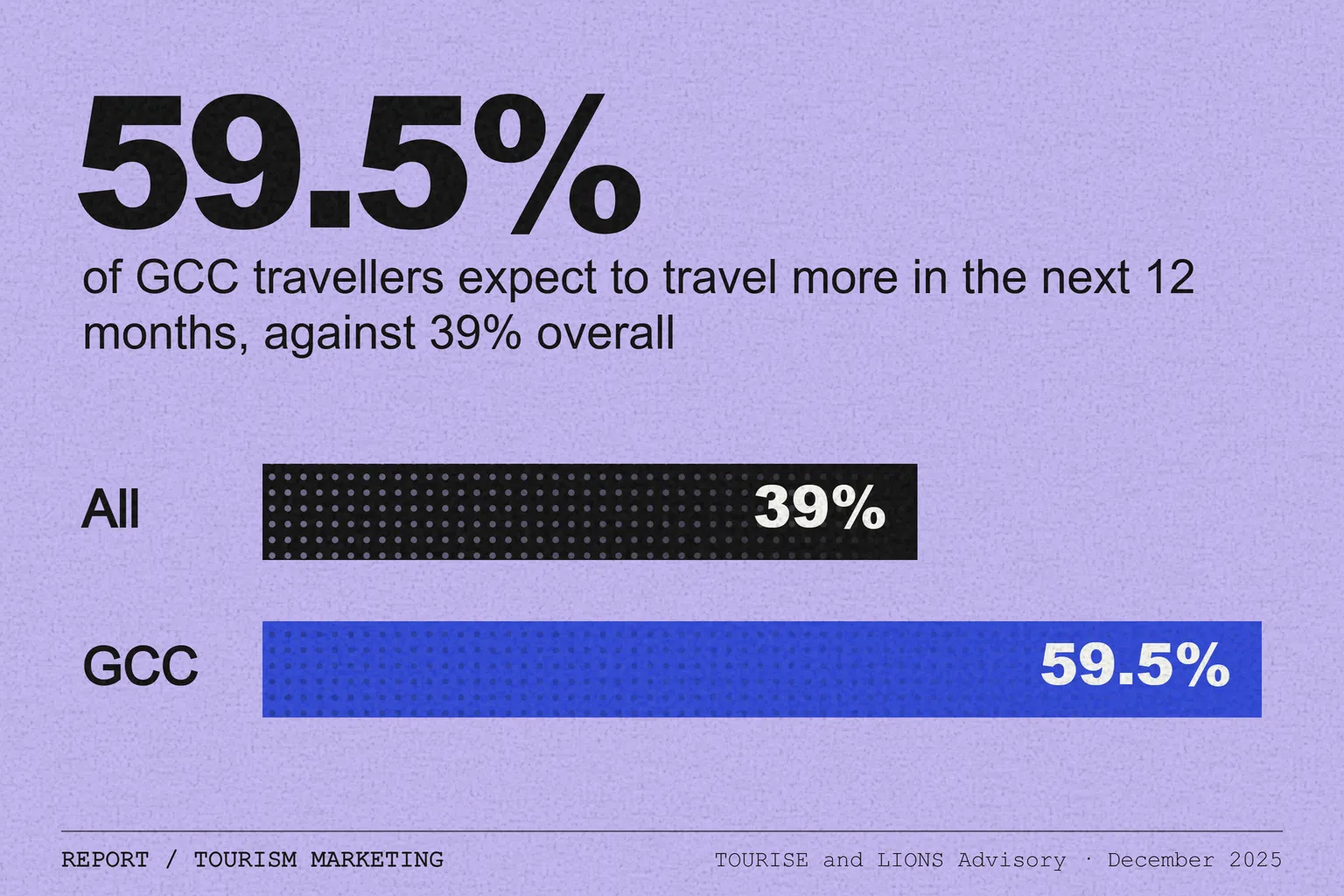
TOURISE and LIONS: travel demand is rising, but tourism ads look alike
In a survey of 8,374 international travellers for TOURISE and LIONS Advisory, 60% say many travel ads look alike and half can't recall the last one they saw.