Gaming investors put $1.9bn into development tools. What does that buy a brand?
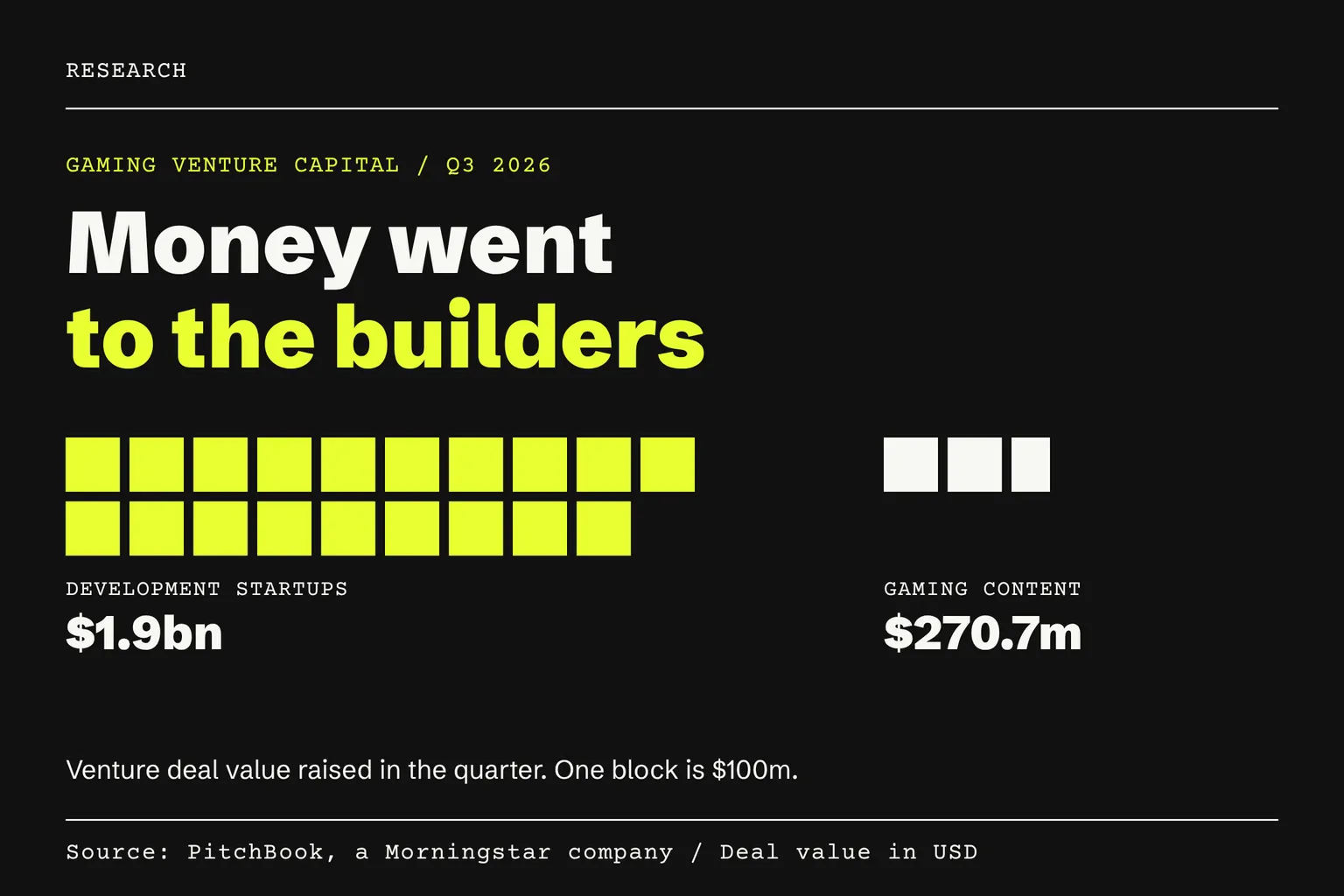
PitchBook’s Q3 snapshot shows capital moving toward the companies that help build games. Funding a tool and funding a game people want to play are different bets.
By Brief & Butter · 22 Nov 2026Research publisher: PitchBook
Source: PitchBook, a Morningstar company
A brand can now ask a studio to show three playable versions of an idea before it signs off production. The harder question is which version gives someone a reason to come back. PitchBook’s Q3 2026 numbers help explain why agencies are seeing more options on the production side of that conversation.
72.3%
Share of Q3 2026 gaming venture deal value going to development startups, according to PitchBook
A quarter shaped by large deals
Development startups raised $1.9bn. Gaming content companies raised $270.7m, down from $2.7bn in Q2. PitchBook identifies large rounds for AI tooling businesses among the drivers. A handful of deals can change a quarter’s mix substantially. These figures describe investment flows. They tell us little about player spending, the popularity of a genre or demand in Saudi Arabia.
What a Saudi commissioning team can test
For a branded game at an event, ask two suppliers to prototype the same short challenge on the devices visitors will use. Watch how long it takes a first-time player to start, whether they finish and whether they choose a second round. Then compare the cost of changing the Arabic dialogue or refreshing a level after launch. Those observations reveal which tool saves production time and which idea earns play.
Why it matters
New tools widen the choice of partners. A small playable test can tell a buyer more about the finished experience than a vendor’s fundraising announcement.
PitchBook’s public summary describes its three-page first look. The complete report is available through the publisher’s download form.
Brief & Butter analysis (PDF)
Two pages, English and Arabic. The publisher’s study is linked above.
Related research.
Saudi social commerce in 2026 — where does checkout happen?
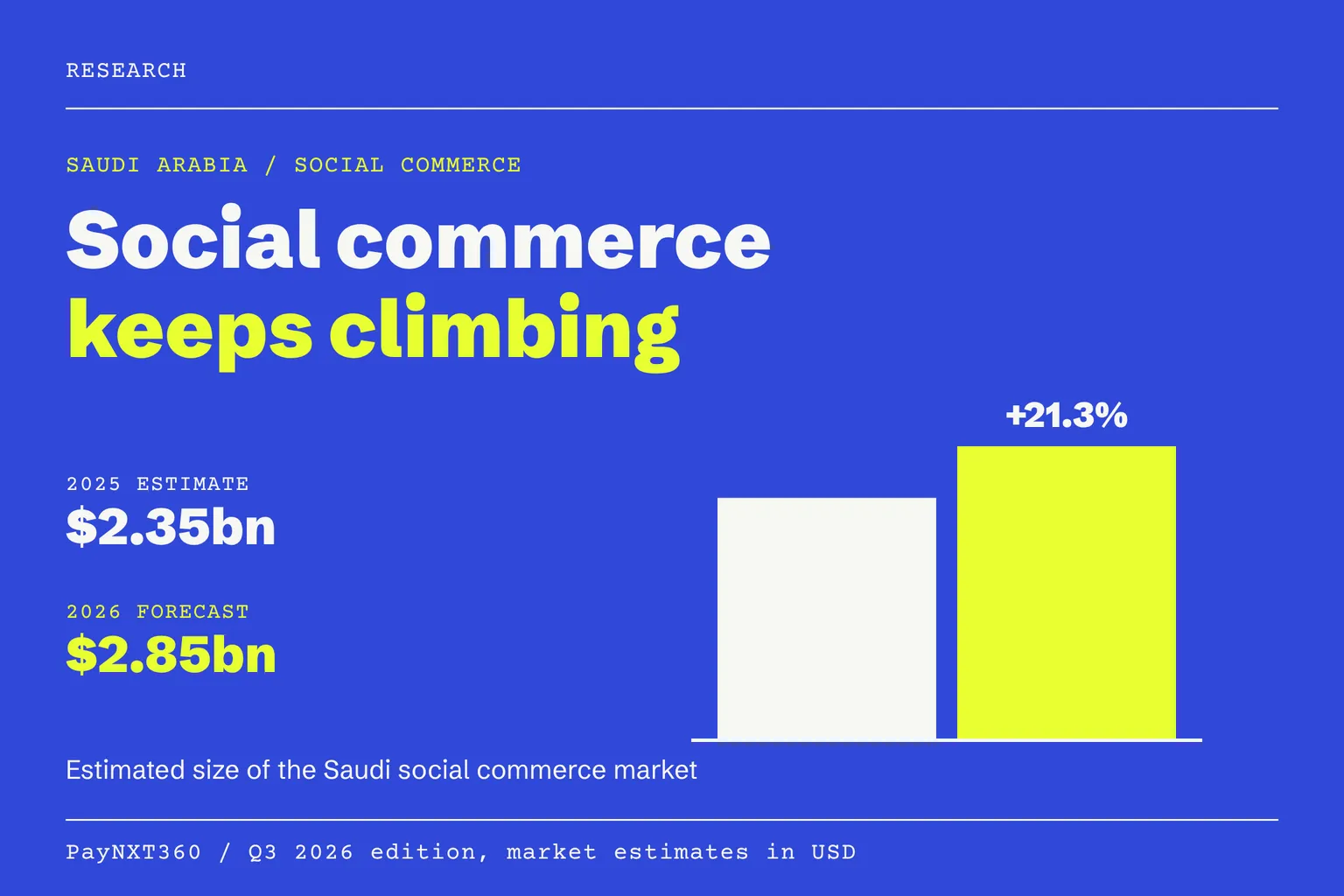
PayNXT360 forecasts 21.3% growth in 2026. A Saudi Ramadan shopping experience shows why finding a product and paying for it deserve separate measures.
Why it mattersAsk the platform for the action it can observe and the retailer for the transaction it can verify. A budget review is more useful when it can explain the gap between the two.
Proving creative impact at Cannes in 2026
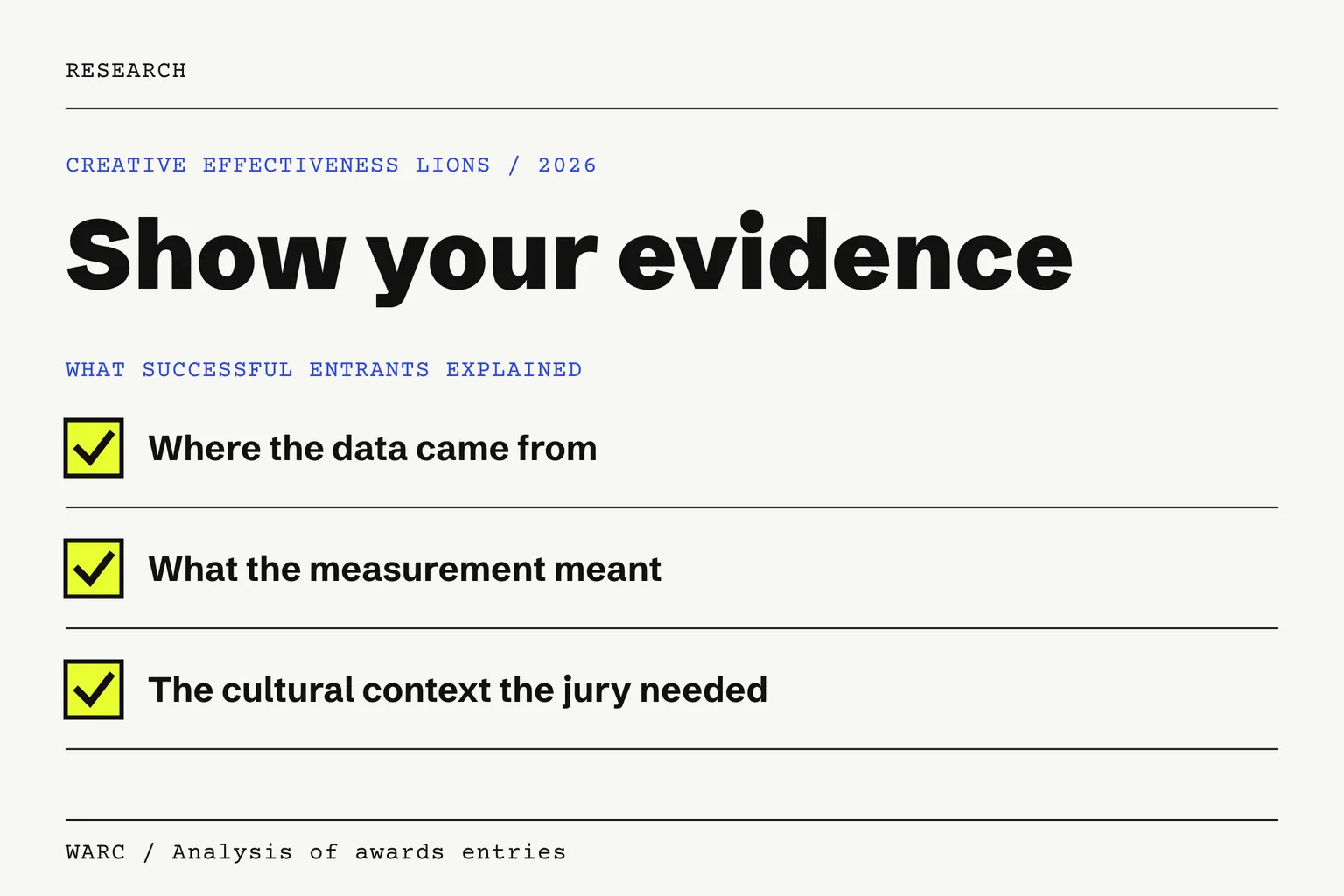
WARC’s analysis of 2026 Creative Effectiveness Lions entries offers a practical test for case films: can someone outside the market follow the evidence?
Why it mattersGive every results slide a named source, a comparison period and a sentence explaining what the number proves. Those details give an international jury enough context to understand a locally specific idea.
MENA grocery in 2026 — when the supermarket becomes the brand
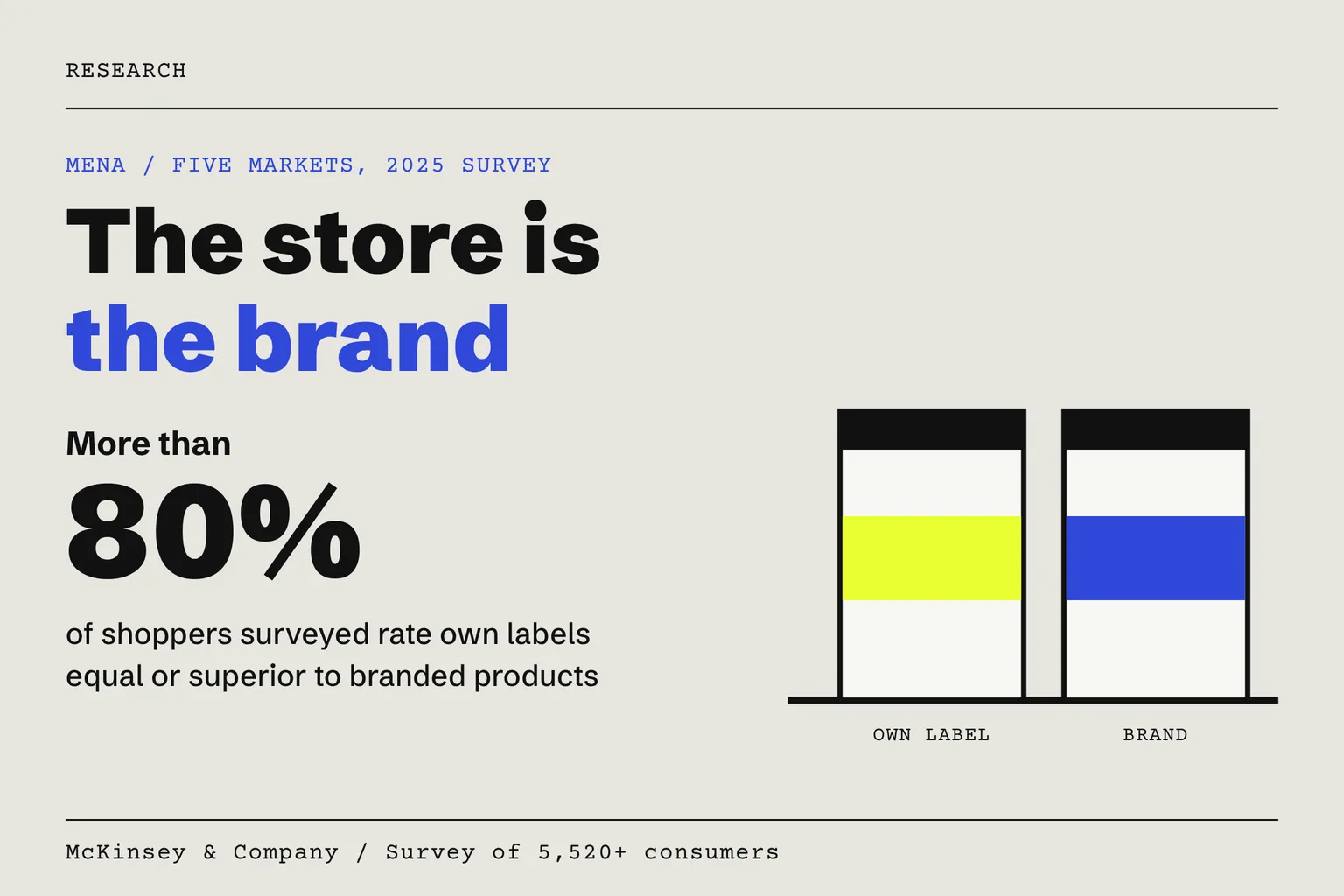
Across five MENA markets, more than four in five shoppers surveyed rated retailers’ own labels as good as or better than branded products. What still earns a premium on the shelf?
Why it mattersBefore putting “value” in a brief, decide how a shopper can recognise it. For one product it may be fewer failed meals. For another it may be a predictable cost per serving. Each calls for different creative work.