OpenAI Signals 3.0: ChatGPT work use spreads across 165 tasks as writing falls to 21%.
OpenAI's new Signals data maps ChatGPT work use to 165 activities in nearly 100 countries, as writing drops and information and image requests grow.
By OpenAI · Oct 26, 2026
OpenAI has published version 3.0 of OpenAI Signals, its public dataset on how individuals use ChatGPT. The new release adds a file that sorts work-related messages into 165 standard work activities across nearly 100 countries, covering the first quarter of 2025 to the third quarter of 2026.
The release went out on 26 October with an OpenAI Economic Research page, "ChatGPT's expanding world of work". The wider package also restates two years of topic data. A detailed reading of every file by PPC Land, published on 27 October, shows writing has lost its place as the main reason people open ChatGPT, while practical advice, information lookups and images have grown.
Key findings
On work activities, from OpenAI's own page:
- The release maps work messages to 165 Intermediate Work Activities (IWAs), the task categories used in O*NET, the US government's occupational database.
- Work use is becoming less concentrated. Across 74 countries observed in every quarter, the ten most common activities made up an average of 51.1% of each country's work messages in Q3 2026, down from 56.0% in Q1 2025.
- Countries are specialising in different kinds of work, and their task mixes are drifting further apart over the period.
- In the US, about 43% of the employment-weighted task mix sits in activities such as moving materials or operating vehicles, which barely show up in ChatGPT use.
On topics, as read from the files by PPC Land:
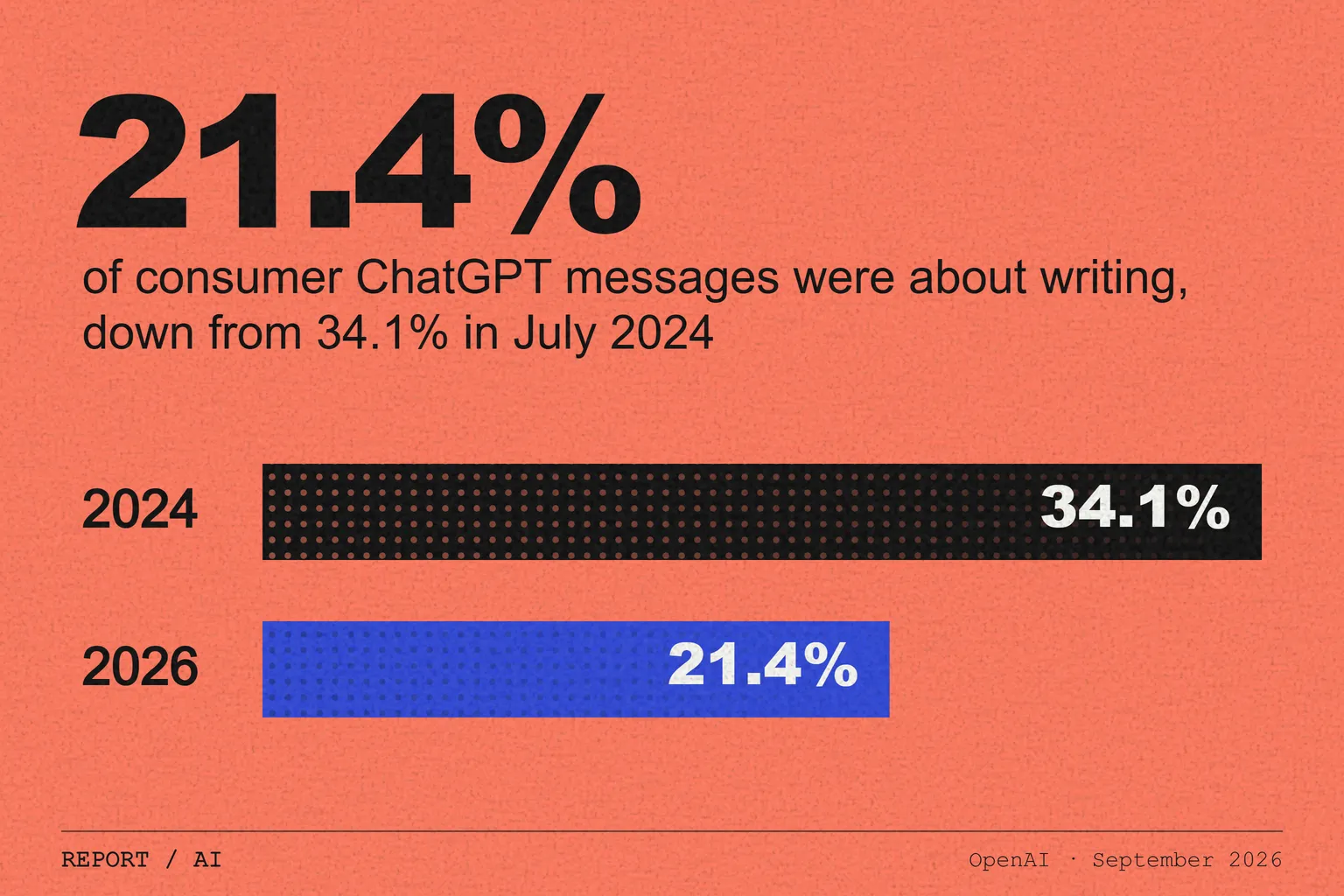
- Writing fell from 34.1% of consumer messages in July 2024 to 21.4% in September 2026.
- Practical guidance, which covers how-to advice, tutoring, ideas and health questions, rose from 26.1% to 28.1% and has been the largest topic every month since March 2025.
- Seeking information rose from 16.7% to 20.2%; images and other media rose from 2.0% to 8.8%; technical help, including coding, fell from 13.5% to 4.6%.
- The share of messages classified as work-related dropped from 51.6% to 32.2%.
- Users with typically feminine first names sent 51.8% of messages in September 2026, up from 42.2%, and users aged 65 and over tripled their share from 0.9% to 2.7%.
The Gulf in the data
PPC Land's own country calculations, which average three months to reduce noise, give a regional picture:
- In Saudi Arabia, writing fell from 37.7% of messages in Q3 2024 to 20.8% in Q3 2026. In the UAE it fell from 45.9% to 28.4%, but the UAE remains one of the few markets where writing is still the largest topic.
- About 60% of UAE writing messages were work-related, among the highest of the large markets PPC Land tracked.
- The work activity "obtain information about goods or services" reached 3.9% of work messages in Saudi Arabia and 3.8% in the UAE in Q3 2026, among the highest of the large markets.
These country figures are PPC Land's calculations from OpenAI's files, not numbers OpenAI has published itself.
How the research was done
OpenAI's classifiers label 1 million consumer ChatGPT messages a month, from July 2024 to September 2026, sent by accounts with a declared age of 18 or over on Free, Go, Plus and Pro plans. No person reads the messages; automated systems classify them after identifying information is removed. Enterprise accounts and Codex, OpenAI's coding agent, are left out, so the data likely understates business use and some coding. Users who deleted their accounts or opted out of training are also excluded. OpenAI adds statistical noise to protect privacy and withholds results for small groups. Gender is inferred from first names, not stated by users, and age is self-declared.
The work file is quarterly. Country comparisons depend on a single global sample, so figures for smaller markets carry more variance, and version 3.0 restates earlier months, so it will not always match older Signals releases.
About this report
OpenAI Signals is run by OpenAI's Economic Research team, whose authors on this release include Aaron Chatterji, David Deming and Zoe Hitzig. The data can be viewed in interactive charts or downloaded as spreadsheets.
For marketers in Saudi Arabia and the Gulf, the useful signal is the rise of information and product questions. As more research before purchase happens inside chat assistants, brands need product information that AI tools can find and cite, not only search ads.
Published by OpenAI, October 2026. Free. Get the full report from OpenAI
Sources
More stories.
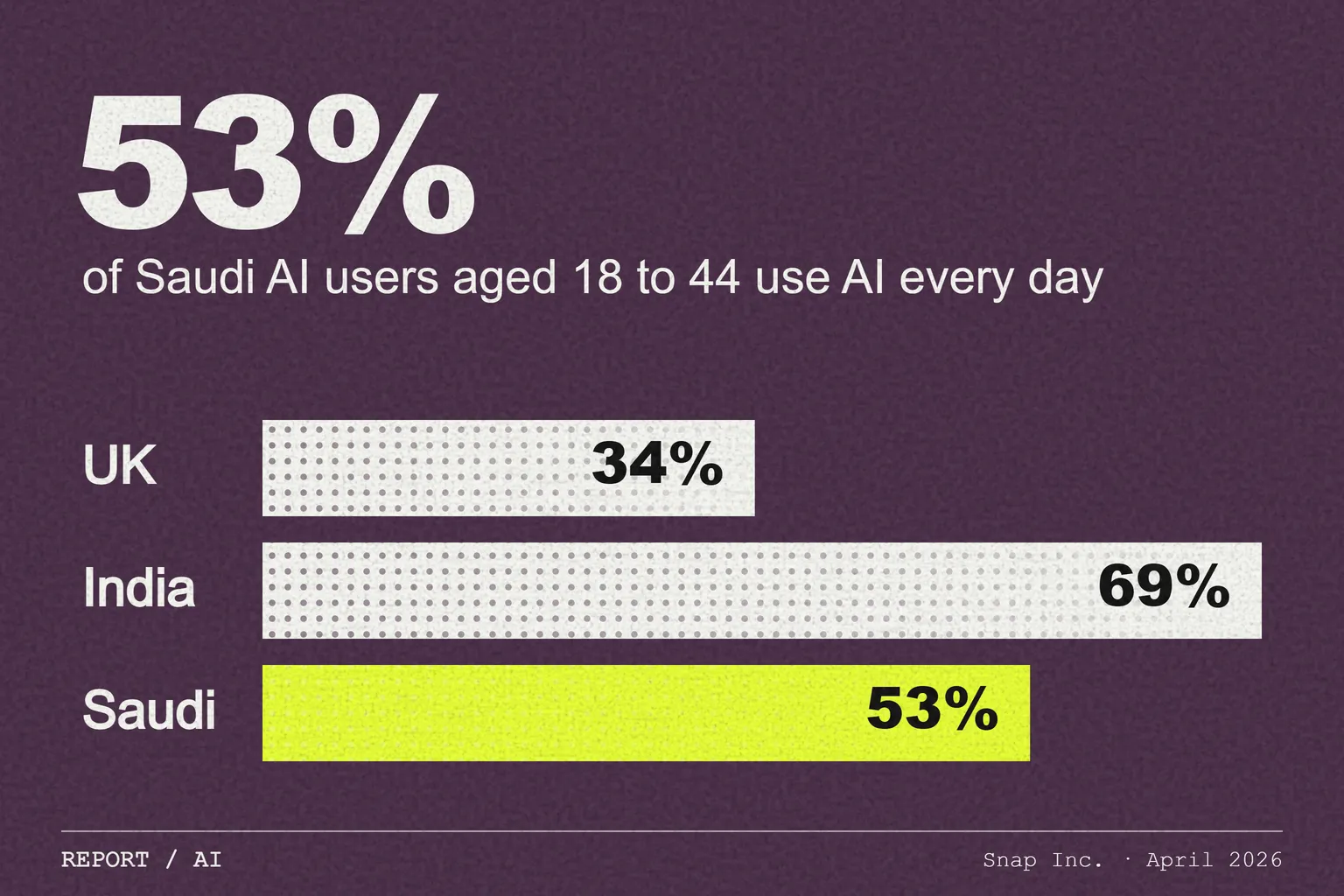
Snap, WPP and Ipsos AI report: 53% of Saudi AI users use it daily, but 65% find hyper-personalised AI ads intrusive
Ipsos surveyed 4,261 AI users aged 18 to 44 in five markets, Saudi Arabia among them, for Snap and WPP: people want AI as a social helper, but 70% find hyper-personalised AI ads intrusive.
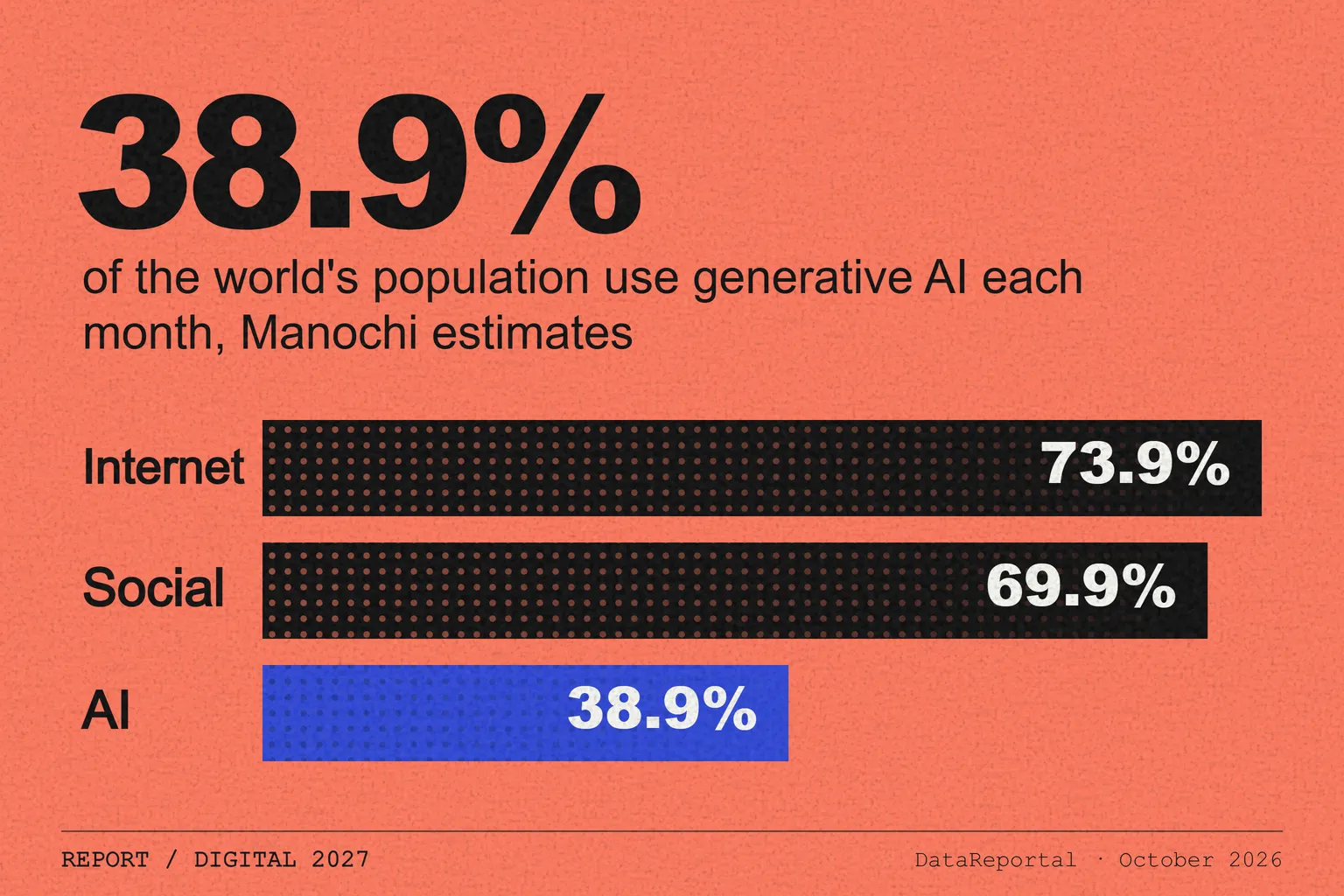
Digital 2027 Global Overview: 6.15 billion online, 3.24 billion using generative AI
DataReportal's Digital 2027 report counts 6.15 billion internet users and 5.81 billion social media user identities, while monthly users of generative AI platforms grew by more than 1.2 billion in a year.
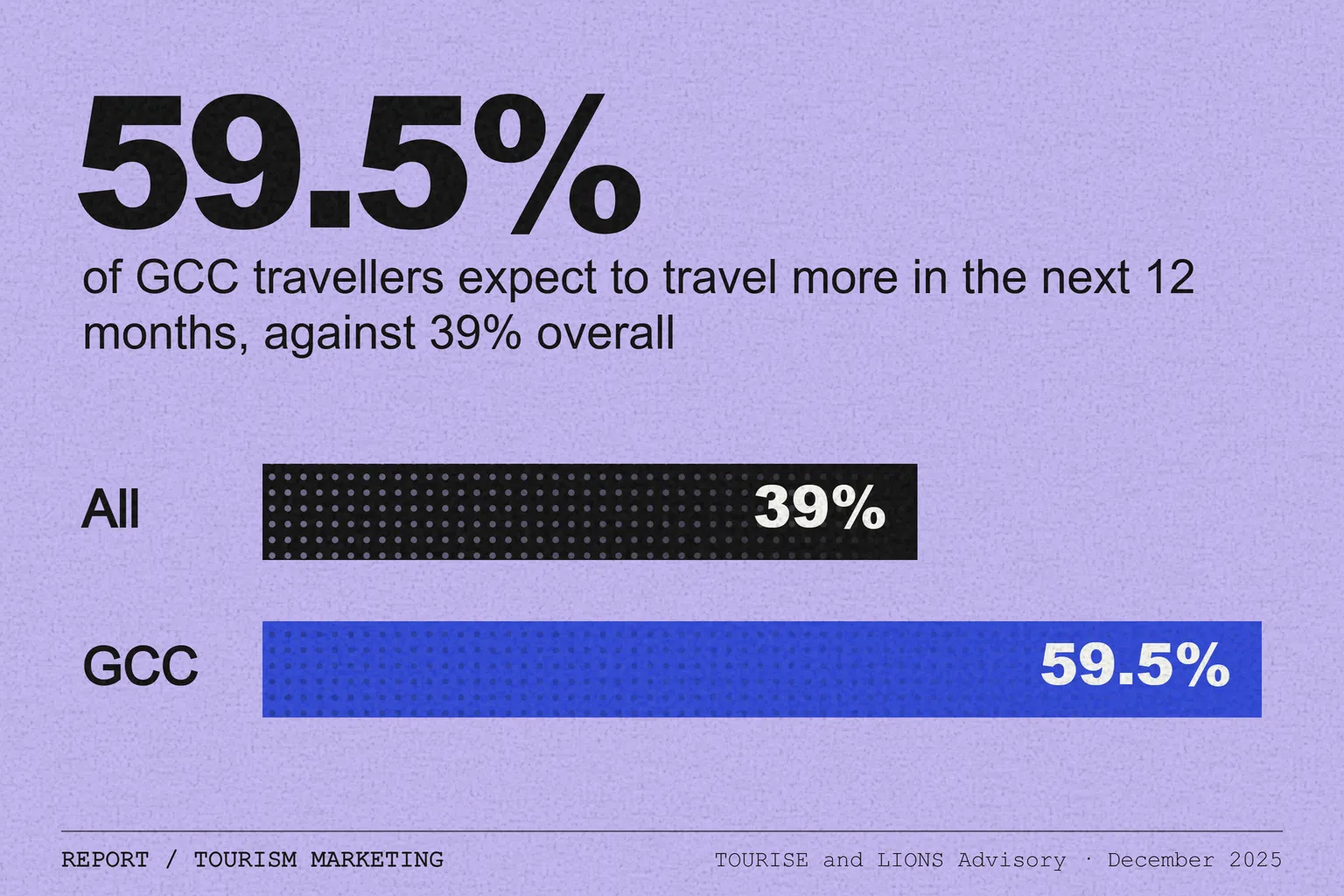
TOURISE and LIONS: travel demand is rising, but tourism ads look alike
In a survey of 8,374 international travellers for TOURISE and LIONS Advisory, 60% say many travel ads look alike and half can't recall the last one they saw.