Microsoft AI diffusion report: UAE leads the world as Saudi Arabia joins the top 25.
Microsoft's Q2 2026 report puts generative AI use at 18.8% of working-age people worldwide, with the UAE first at 73.3% and Saudi Arabia up five places to 25th.
By Microsoft AI Economy Institute · Sep 21, 2026
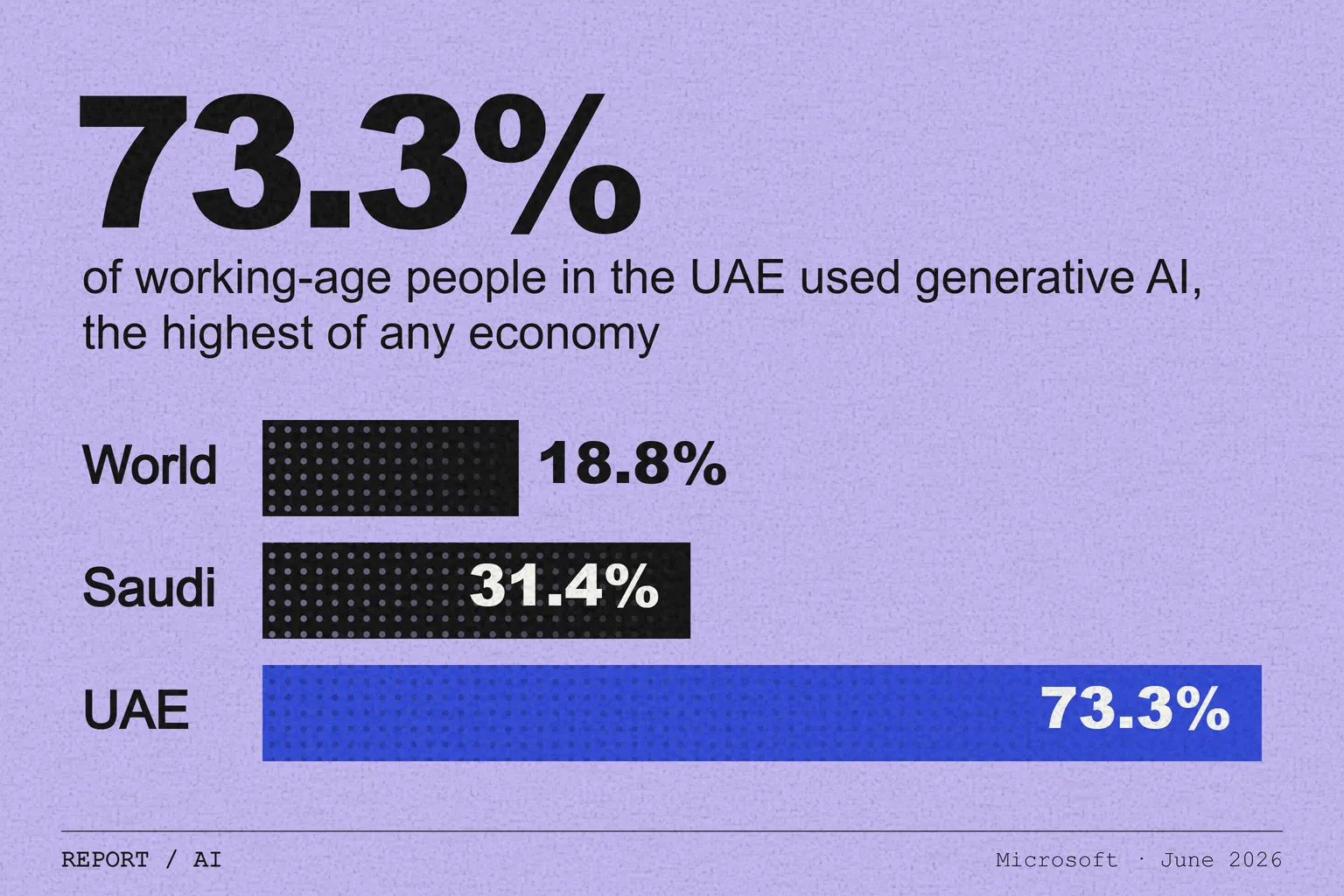
Microsoft's latest Global AI Diffusion report, published by its AI Economy Institute in September 2026, finds that 18.8% of the world's working-age population used a generative AI product in June 2026, up about a point in three months. The UAE leads every economy measured, at 73.3%, and Saudi Arabia made the biggest jump in the rankings, rising from 30th to 25th.
The report is a quarterly snapshot built from Microsoft's own usage data rather than a survey. Alongside the country rankings, it looks at how AI is used in different parts of the world and at the spread of open-weight models.
73.3%
of the UAE's working-age population used generative AI in June 2026, the highest of any economy
31.4%
in Saudi Arabia, up two points in a quarter, lifting it from 30th to 25th
18.8%
worldwide, up from 17.8% in the first quarter
28.8%
in the Global North, against 16.2% in the Global South, a gap that keeps widening
Key findings
- The UAE is far ahead. 73.3% of working-age people in the UAE used generative AI in June 2026, up 3.2 points in a quarter and well ahead of Singapore (64.3%), Ireland (49.9%), France (49.6%) and Norway (49.4%).
- Saudi Arabia is climbing. Usage in Saudi Arabia rose two points to 31.4%, the largest rise in rank of any economy, from 30th to 25th, just ahead of Italy on the same share.
- The rest of the Gulf trails the UAE. Qatar is tenth at 43.5%, Oman is at 27.6% and Kuwait at 22.6%. The report has no figure for Bahrain.
- The world average keeps rising. Global usage reached 18.8%, from 17.8% in the first quarter and 16.3% in the second half of 2025. South Korea gained the most, 3.5 points to 40.6%, and Japan grew fastest in relative terms, by about 10% to 24.7%.
- The North–South gap is widening. Usage reached 28.8% in the Global North and 16.2% in the Global South, a gap of 12.6 points, up from 12.1 in the first quarter and 10.6 in the second half of 2025. In consumer Copilot conversations, learning and schoolwork take a much larger share in the Global South, while the North leans towards shopping, search and advice, though Microsoft cautions that this covers early adopters only and partly reflects the South's younger population.
- Open models are spreading. By Microsoft's analysis of public data, open-weight models now account for 75% of token usage on OpenRouter, a platform developers use to reach many AI models, and the number of AI apps and demos hosted on Hugging Face Spaces has grown about 83% since Microsoft's first diffusion report, to 1.46 million.
How the research was done
Microsoft measures AI diffusion as the share of people aged 15 to 64 who used a generative AI product during the period, here June 2026. The figures come from aggregated, anonymised Microsoft telemetry, adjusted for differences in operating system and device market share, internet penetration and population, using a method set out in a 2025 technical paper, and the country data is published alongside the report. It is an estimate drawn from one company's data, not a survey, and Microsoft says no single metric is perfect. The next edition will count newer AI tools, which Microsoft expects to raise the measured share in almost every economy, most of all in China, mainly by capturing use that is already happening.
What it means for marketers
For marketers in the Gulf, the numbers confirm that AI tools are already mainstream in the UAE and spreading quickly in Saudi Arabia. With nearly three in four working-age people in the UAE using generative AI, how a brand appears in AI answers and assistants is a practical question now, not a future one. In Saudi Arabia, nearly a third of working-age people were users by June, and the country is rising faster than most.
The figures measure use of AI products, not what people use them for, and they will rise when Microsoft widens the list of tools it counts. Treat the rankings as a way to compare countries and track change over time rather than as an exact count of users.
About this report
Published by Microsoft AI Economy Institute, September 2026. Free. Get the full report from Microsoft
Sources
More stories.
Snap, WPP and Ipsos AI report: 53% of Saudi AI users use it daily, but 65% find hyper-personalised AI ads intrusive
Ipsos surveyed 4,261 AI users aged 18 to 44 in five markets, Saudi Arabia among them, for Snap and WPP: people want AI as a social helper, but 70% find hyper-personalised AI ads intrusive.
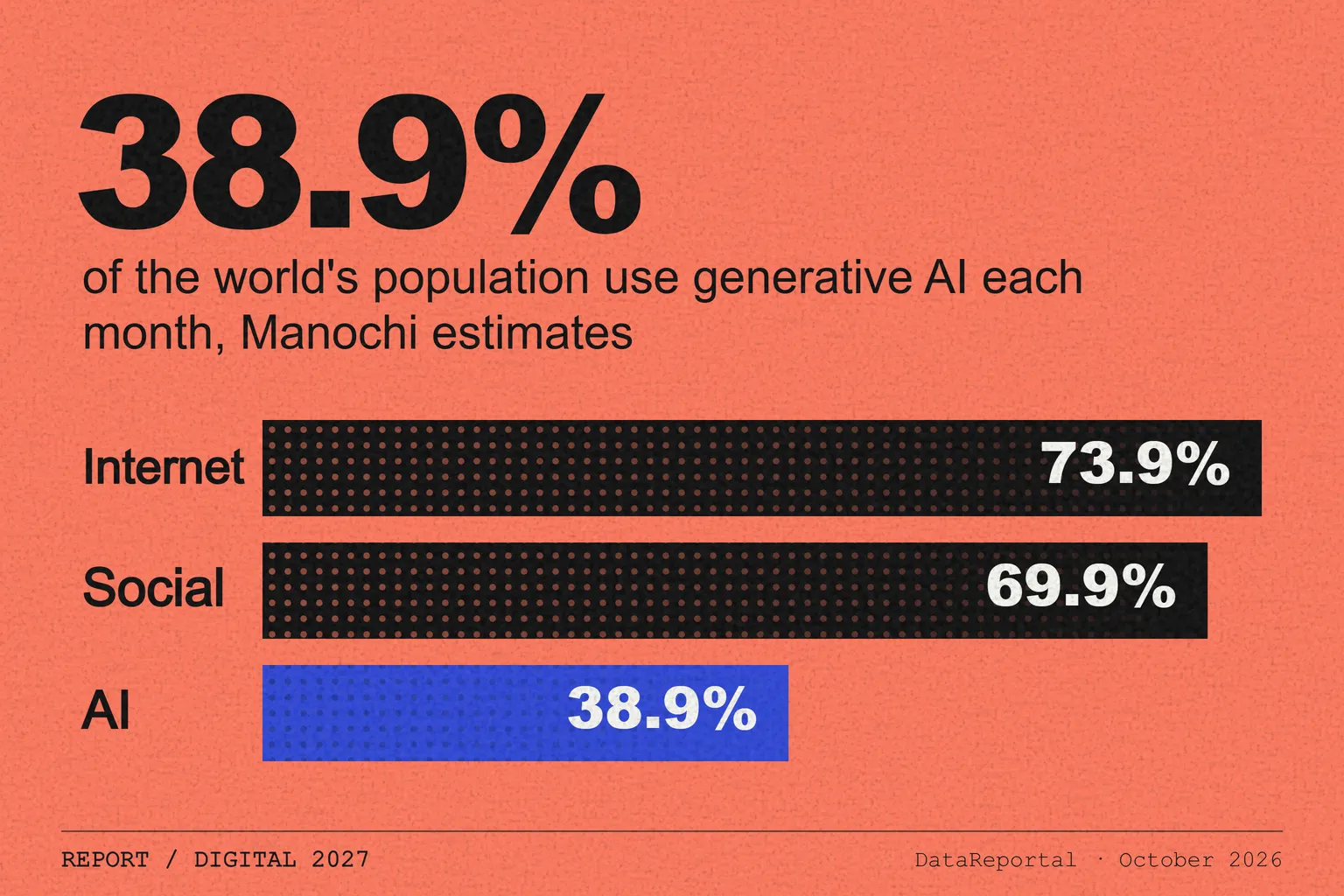
Digital 2027 Global Overview: 6.15 billion online, 3.24 billion using generative AI
DataReportal's Digital 2027 report counts 6.15 billion internet users and 5.81 billion social media user identities, while monthly users of generative AI platforms grew by more than 1.2 billion in a year.
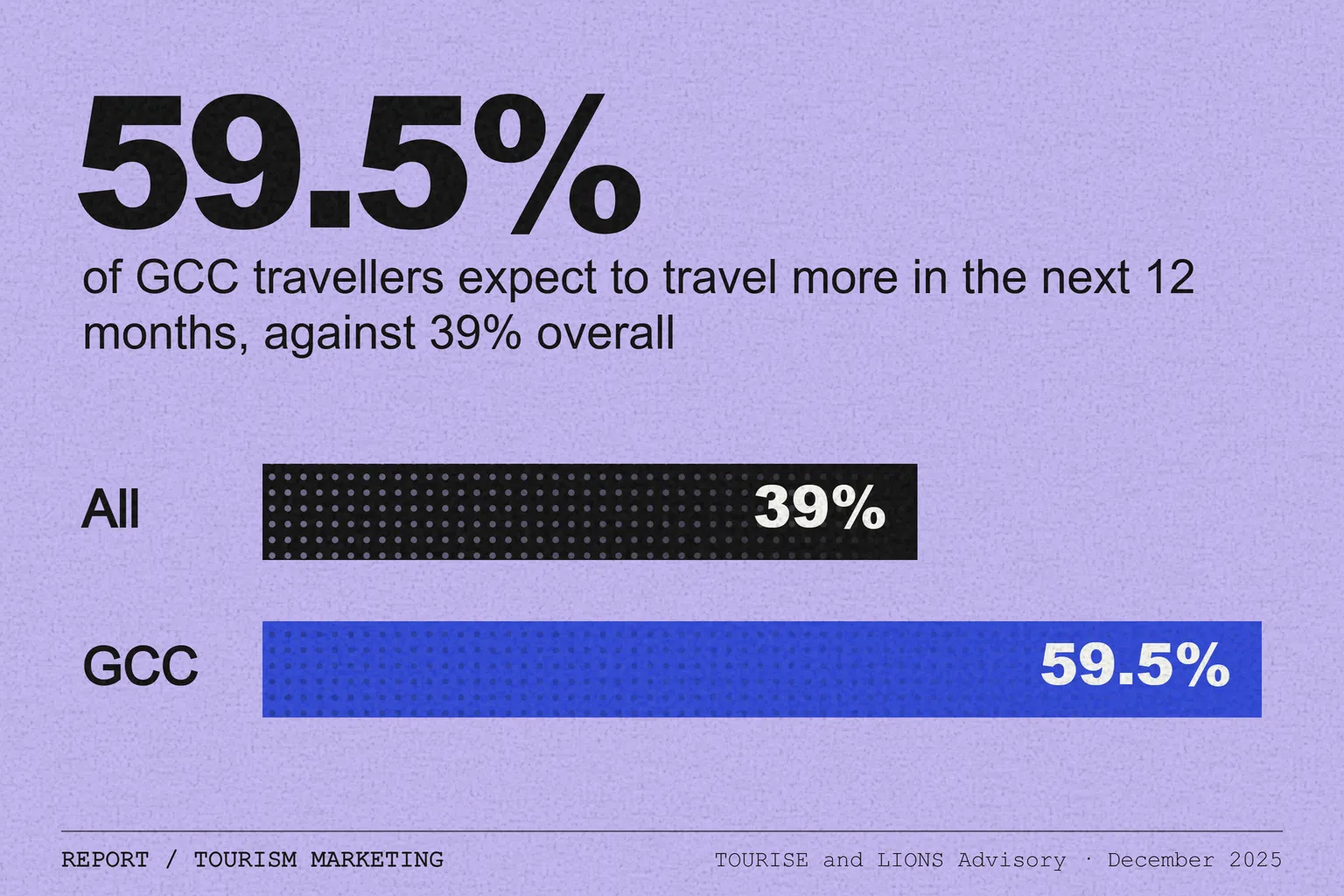
TOURISE and LIONS: travel demand is rising, but tourism ads look alike
In a survey of 8,374 international travellers for TOURISE and LIONS Advisory, 60% say many travel ads look alike and half can't recall the last one they saw.