The wellness opportunity is making it easier to keep going.
PwC’s survey finds a sizable group already using digital nutrition tools in Saudi Arabia. Across its four Middle East markets, time is still a major obstacle to meeting wellness goals.
By Brief & Butter · 23 Nov 2026Research publisher: PwC Middle East
What the study found
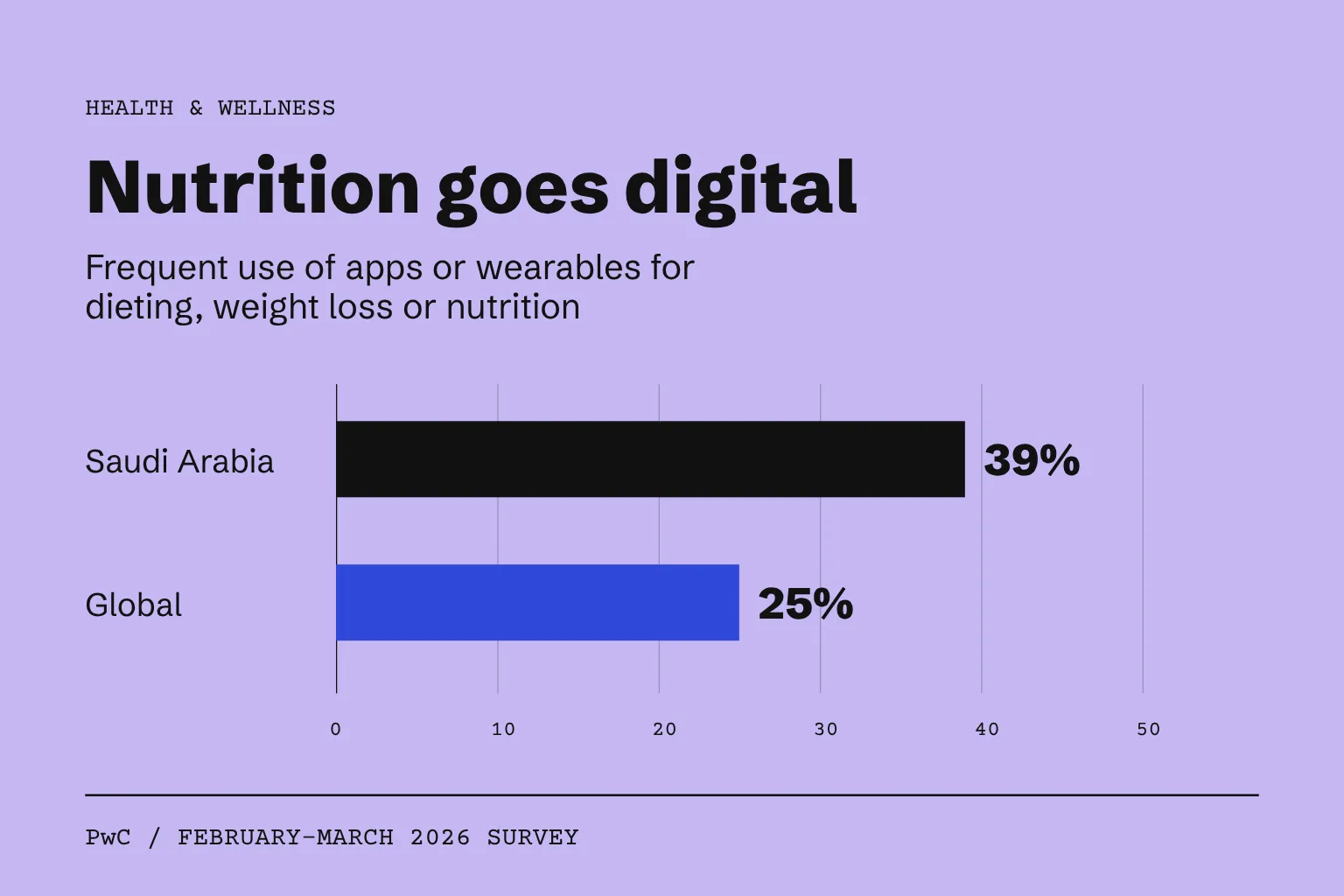
In Saudi Arabia, 39% of respondents say they frequently use apps or wearables for dieting, weight loss or nutrition, compared with 25% globally. That is a 14-point difference in reported use. It describes those specific activities, not use of wearables for every purpose.
The four-market sample adds a useful counterpoint. Across Saudi Arabia, the UAE, Egypt and Qatar, 65% of respondents say finding time for wellness goals is difficult, versus 54% globally. Sixty per cent report difficulty staying motivated. Those are separate survey measures. The data do not tell us how many frequent app users struggle to find time, or whether any given app improves health outcomes.
Why it matters
For wellness brands, supermarkets and fitness platforms, there is a practical proposition to test: help customers fit a small, repeatable action into a day they already have. For a grocer, that could be a quick, clearly labelled meal with ingredients in one basket. For a fitness platform, it might be an easy-to-book short session for people with unpredictable schedules. Compare that message with aspirational creative and track repeat use or repeat purchases as well as first clicks. If you collect personal information along the way, explain what it is for and collect only what the service needs.
Source and limits: PwC, Voice of the Consumer 2026: Middle East findings, published 18 November. The February–March 2026 adult panel survey included 2,614 respondents in these four markets, including 1,006 in Saudi Arabia. These are self-reported behaviours and barriers, not transactions or clinical outcomes. The publisher provides a PDF on its report page.
Related research.
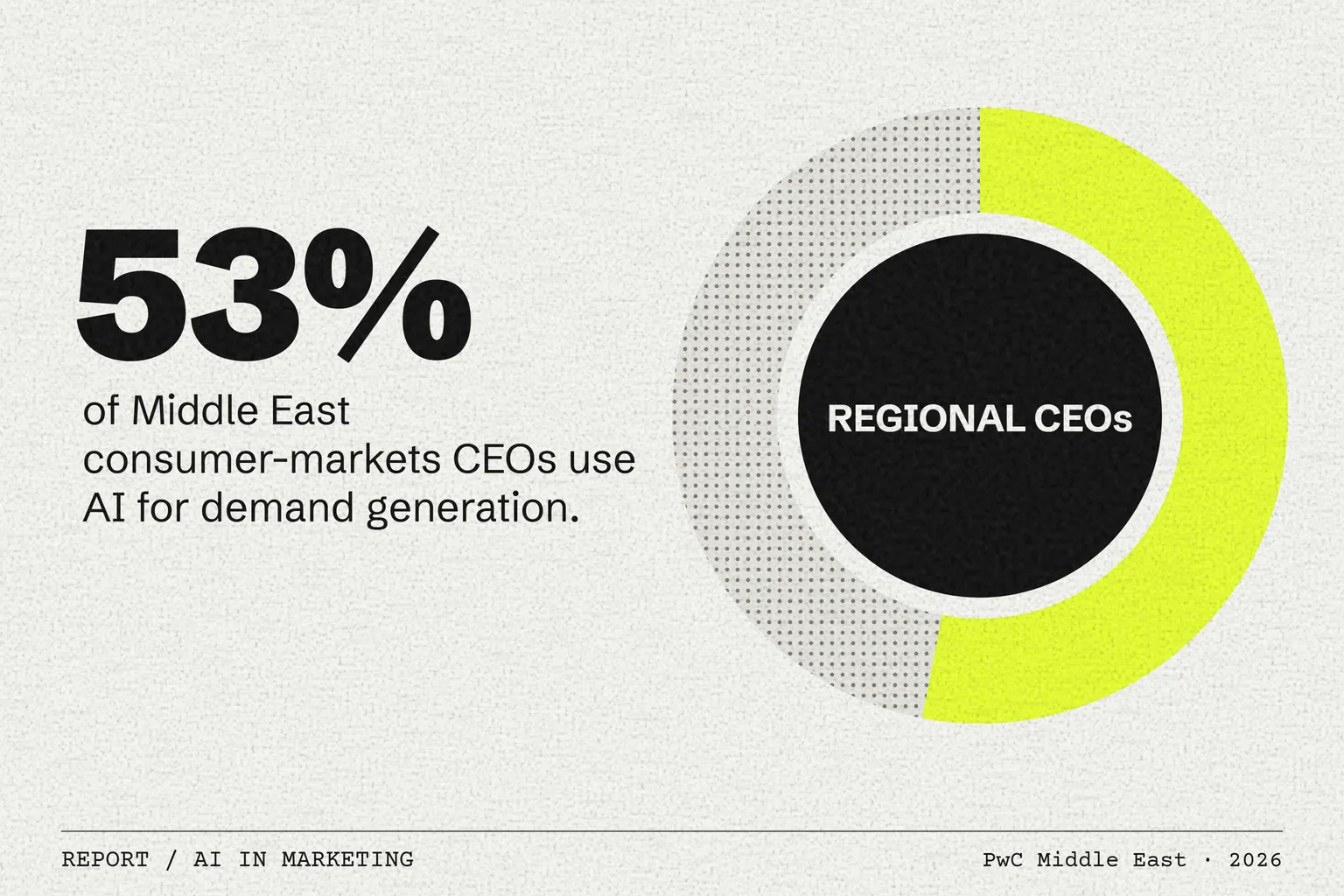
29th Global CEO Survey - Middle East Consumer Markets findings
PwC's CEO survey finds Middle East consumer-business leaders far more upbeat than global peers, with 53% already using AI in demand generation against 18% worldwide.
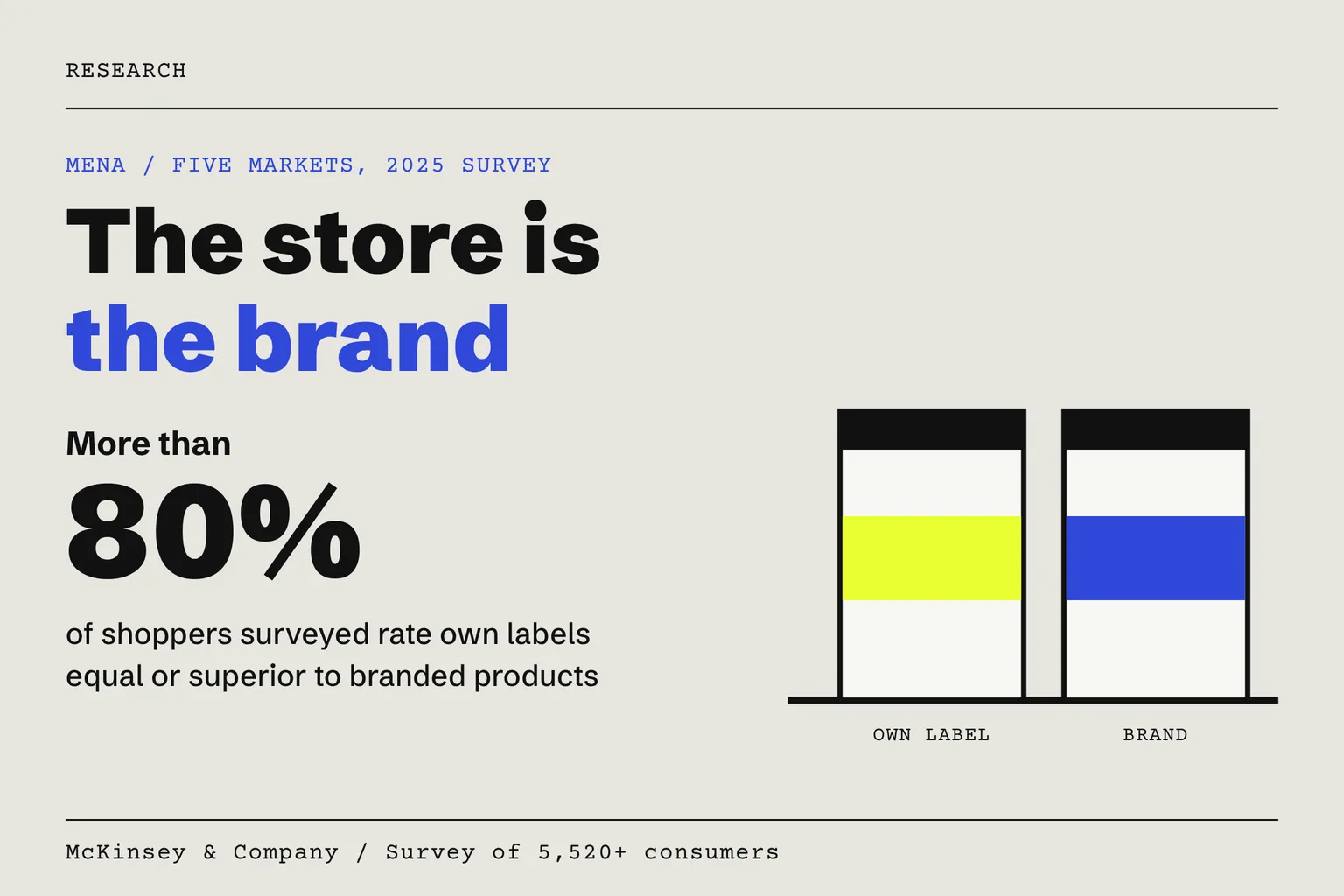
MENA grocery in 2026 — when the supermarket becomes the brand
Across five MENA markets, more than four in five shoppers surveyed rated retailers’ own labels as good as or better than branded products. What still earns a premium on the shelf?
Why it mattersBefore putting “value” in a brief, decide how a shopper can recognise it. For one product it may be fewer failed meals. For another it may be a predictable cost per serving. Each calls for different creative work.
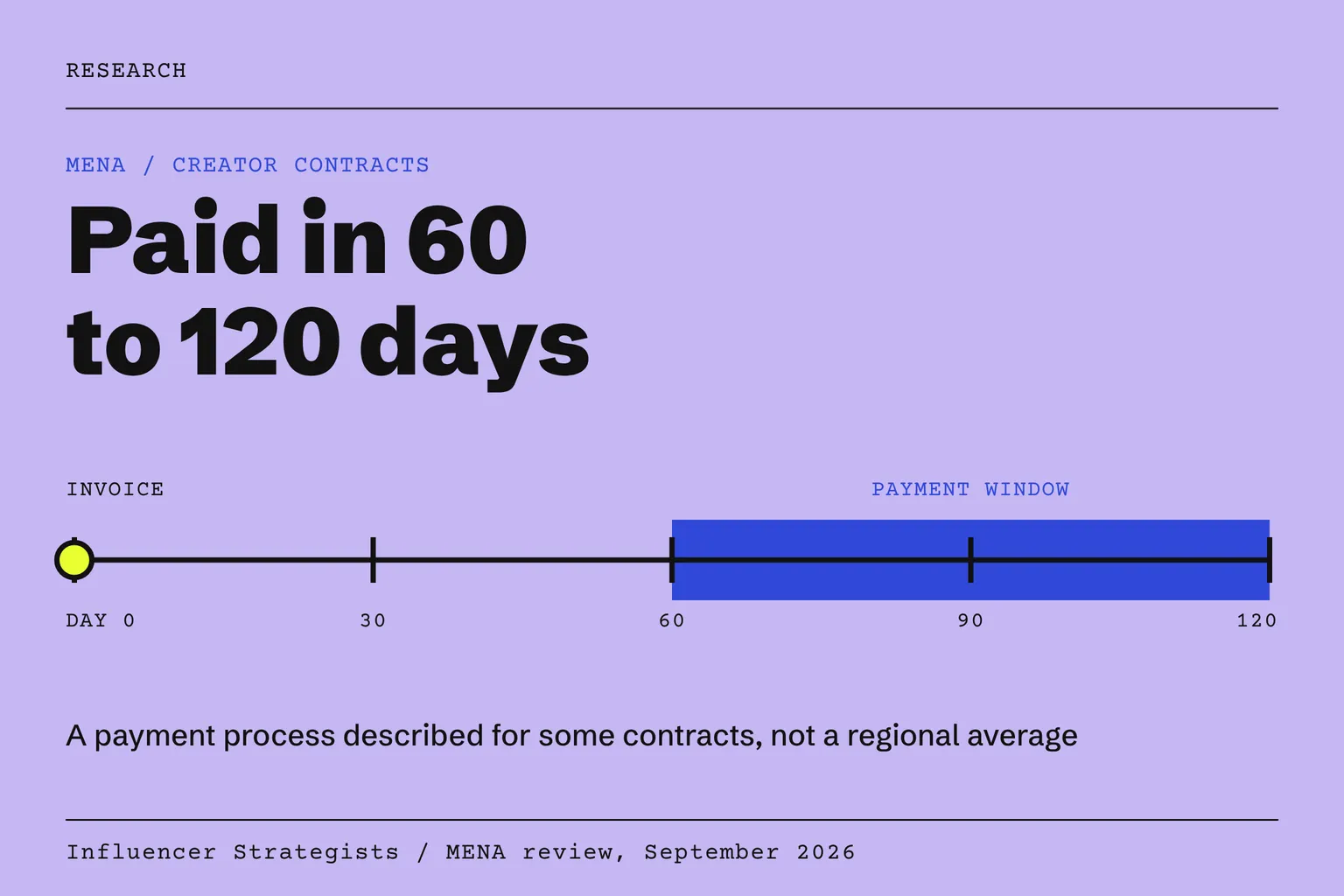
The campaign has finished. When does the creator get paid?
A MENA industry review describes payment windows of 60 to 120 days in some contracts. Visa’s UAE survey offers a closer look at how differently creators can experience payday.
Why it mattersA long payment window can influence which creators can afford to pitch. An agency can learn something its reach report misses by tracking the days between acceptance of an invoice and payment, alongside the agreed production and usage fees.