Ipsos Global Trends: people are hopeful for themselves, not the world.
Ipsos's 10th Global Trends study, covering 38 markets including Saudi Arabia, finds 55% optimistic about themselves and their families but only 25% about the world.
By Ipsos · Sep 28, 2026
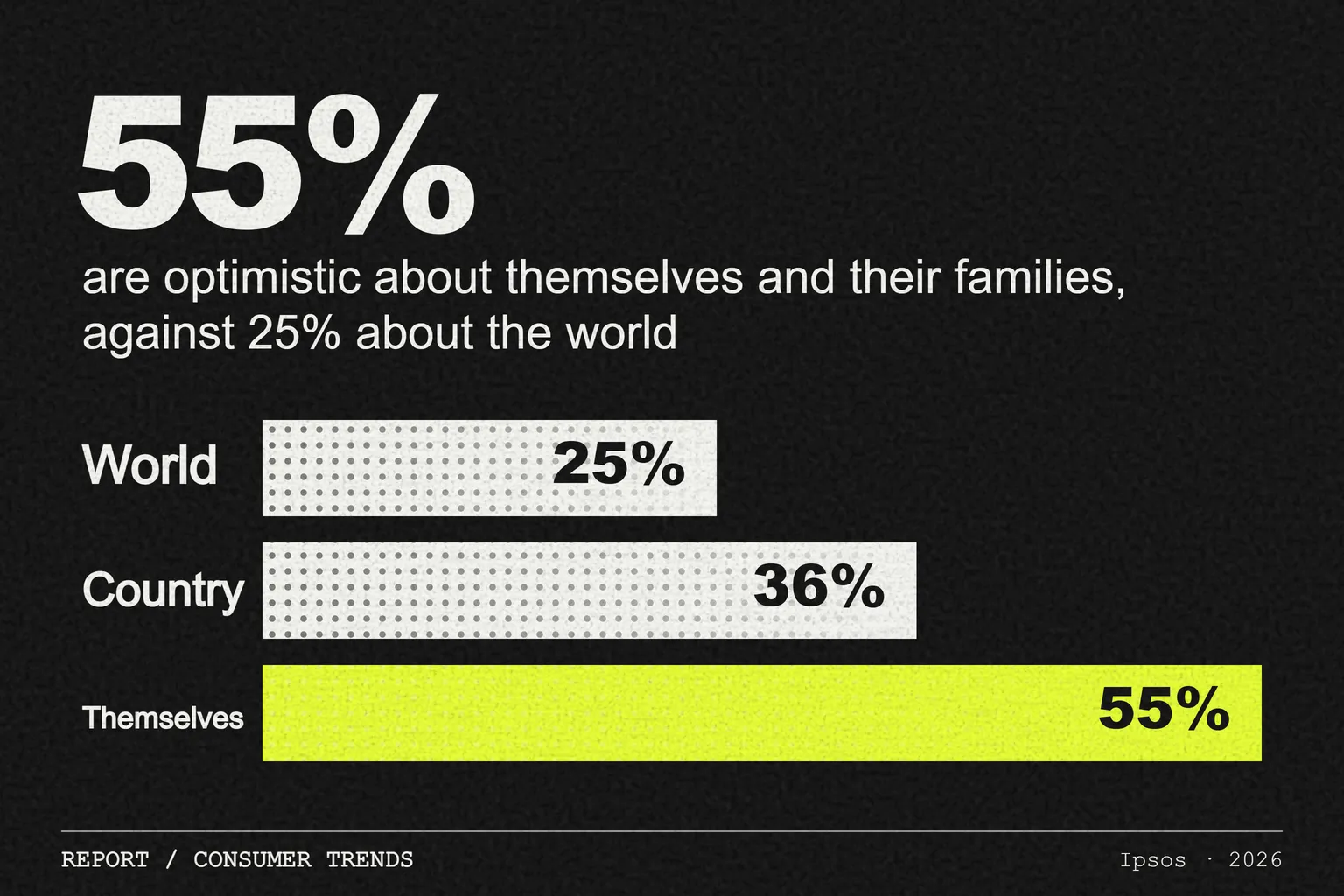
Ipsos has published the 10th edition of Ipsos Global Trends, its survey of nearly 30,000 adults in 38 markets, under the theme "a world in search of silver linings". The headline finding is a split in optimism: only 25% of people are optimistic about the state of the world over the next year and 36% about their own country, but 55% are optimistic about themselves and their families.
Saudi Arabia is one of the 38 markets, with a sample of about 500 people. Ipsos's public pages don't give Saudi results, but Marketing Week, which reported the study before its release, says Saudis were the most optimistic of all the markets across three optimism measures, with a net score of +215.
25%
are optimistic about the state of the world over the next year
55%
are optimistic about themselves and their families
70%
prefer to buy products from their own country rather than from abroad
57%
agree that technical progress is destroying our lives
Key findings
- Hope has moved closer to home. One in four people is optimistic about the world and just over a third about their country, against more than half about their own lives. Even personal positivity is slipping in some markets: in the US it fell 16 points between 2024 and 2026, from 73% to 57%, with similar falls in Brazil (16 points) and South Africa (11).
- Buying local has wide support. 70% say they prefer to buy products from their own country rather than from abroad.
- Doubts about technology are growing. 57% agree that technical progress is destroying our lives. Ipsos says AI remains popular overall, but enthusiasm is weakening in many of the countries and age groups critical to its adoption.
- Health is becoming deliberate. Mental and physical wellbeing now matter almost equally, and more than eight in ten people feel they need to do more to improve both.
- Possessions still signal success. Nearly half say they measure their success by the things they own, and Ipsos finds traditional measures of achievement becoming more important in many markets.
- People are looking inward. Ipsos frames its three "silver linings" as trust relocating, healthcare becoming intentional and people finding hope in themselves. Kelly Beaver, Ipsos's chief executive, says "individuals have rarely felt less in control of the world around them".
How the research was done
The report is organised around nine trends: Globalisation Fractures, Climate convergence, Conscientious Health, The Power of Trust, Technowonder, Nouveau Nihilism, Escape to Individualism, Splintered Societies and Retreat to Old Systems. Ipsos ran the survey online on its Global Advisor platform between 22 May and 5 June 2026 and interviewed 29,542 adults. Samples were about 1,000 people in larger markets and about 500 in others, including Saudi Arabia, and the age range was 16 to 74 in most markets. In Ipsos's words, the Saudi sample is "more urban, more educated, and/or more affluent than the general population", so it reflects the more connected part of the population. Global figures are simple averages of the markets and are not weighted by population. The UAE is not among the markets surveyed.
What it means for marketers
For brands in Saudi Arabia, the global gloom may not be the local picture. If Marketing Week's reading of the data holds, Saudi consumers are the most upbeat of the 38 markets, which supports confident, forward-looking work. The preference for buying local is the other number to watch: Ipsos's global figure suggests origin is a strong claim in many markets, and Saudi brands can test whether it holds at home.
The other findings read as cautions. Scepticism about technology means AI features need a clear human benefit, and the turn towards personal goals rewards brands that help people feel in control of their health, money and identity. Because Ipsos's Saudi sample leans urban and affluent, its results describe connected consumers rather than the whole population.
About this report
Published by Ipsos, September 2026. Free with sign-up. Get the full report from Ipsos
Sources
- Ipsos, The 10th edition of Ipsos Global Trends finds a world in search of silver linings, 28 September 2026
- Ipsos, Ipsos Global Trends 10th Edition
- Ipsos, Ipsos Global Trends 2026 methodology
- Marketing Week, Personal consumer optimism holding firm against global pressures, study finds, 24 September 2026
More stories.
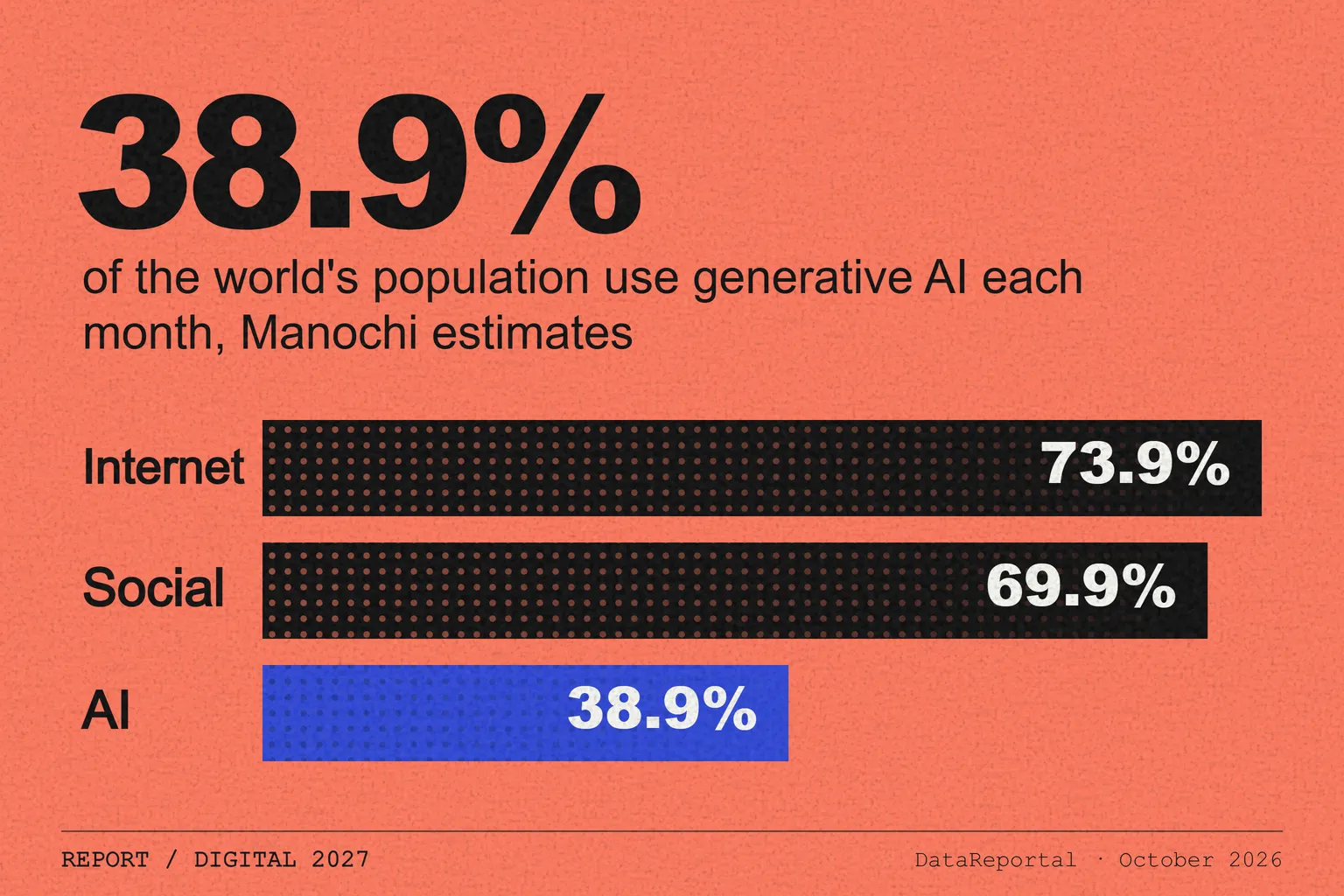
Digital 2027 Global Overview: 6.15 billion online, 3.24 billion using generative AI
DataReportal's Digital 2027 report counts 6.15 billion internet users and 5.81 billion social media user identities, while monthly users of generative AI platforms grew by more than 1.2 billion in a year.
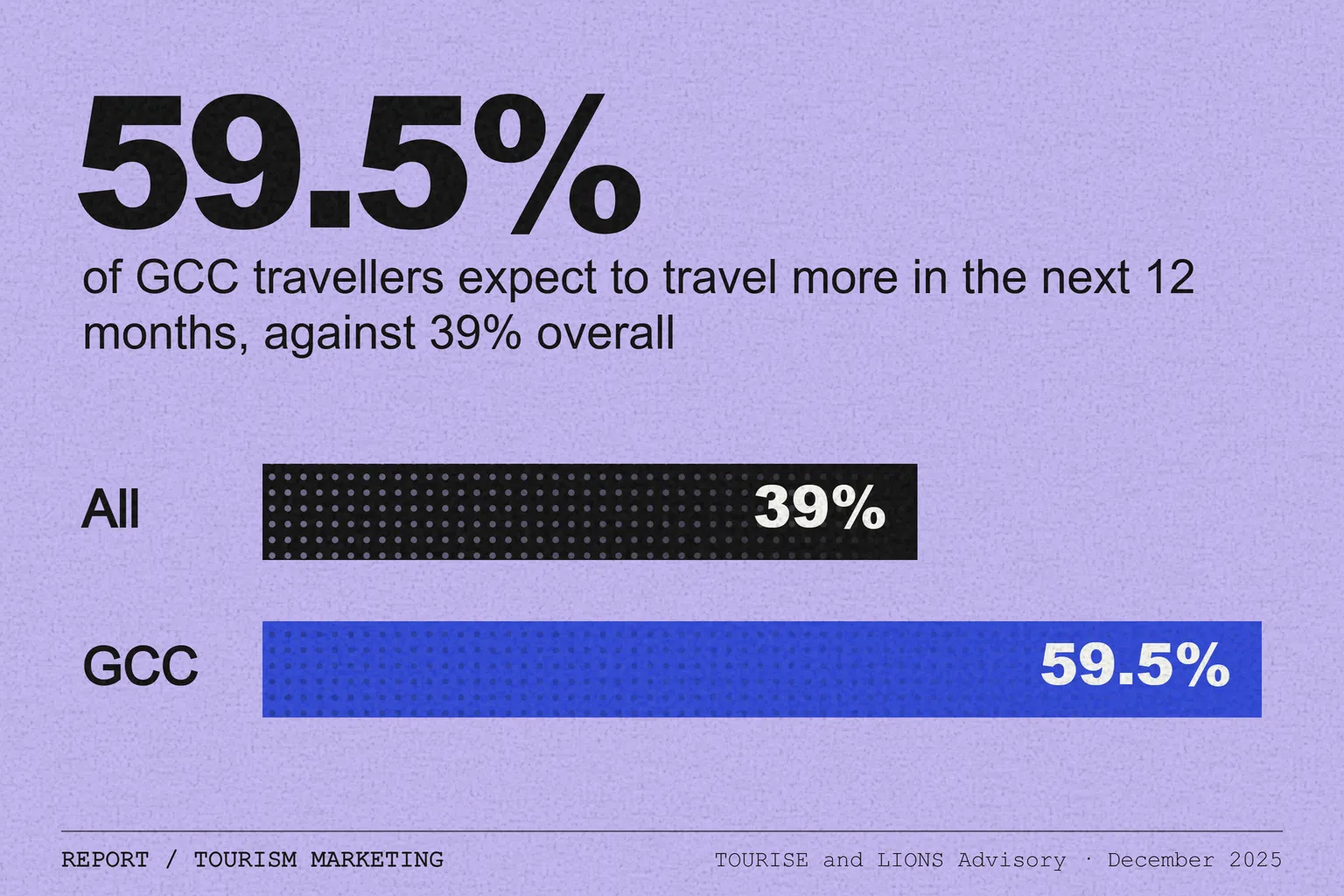
TOURISE and LIONS: travel demand is rising, but tourism ads look alike
In a survey of 8,374 international travellers for TOURISE and LIONS Advisory, 60% say many travel ads look alike and half can't recall the last one they saw.
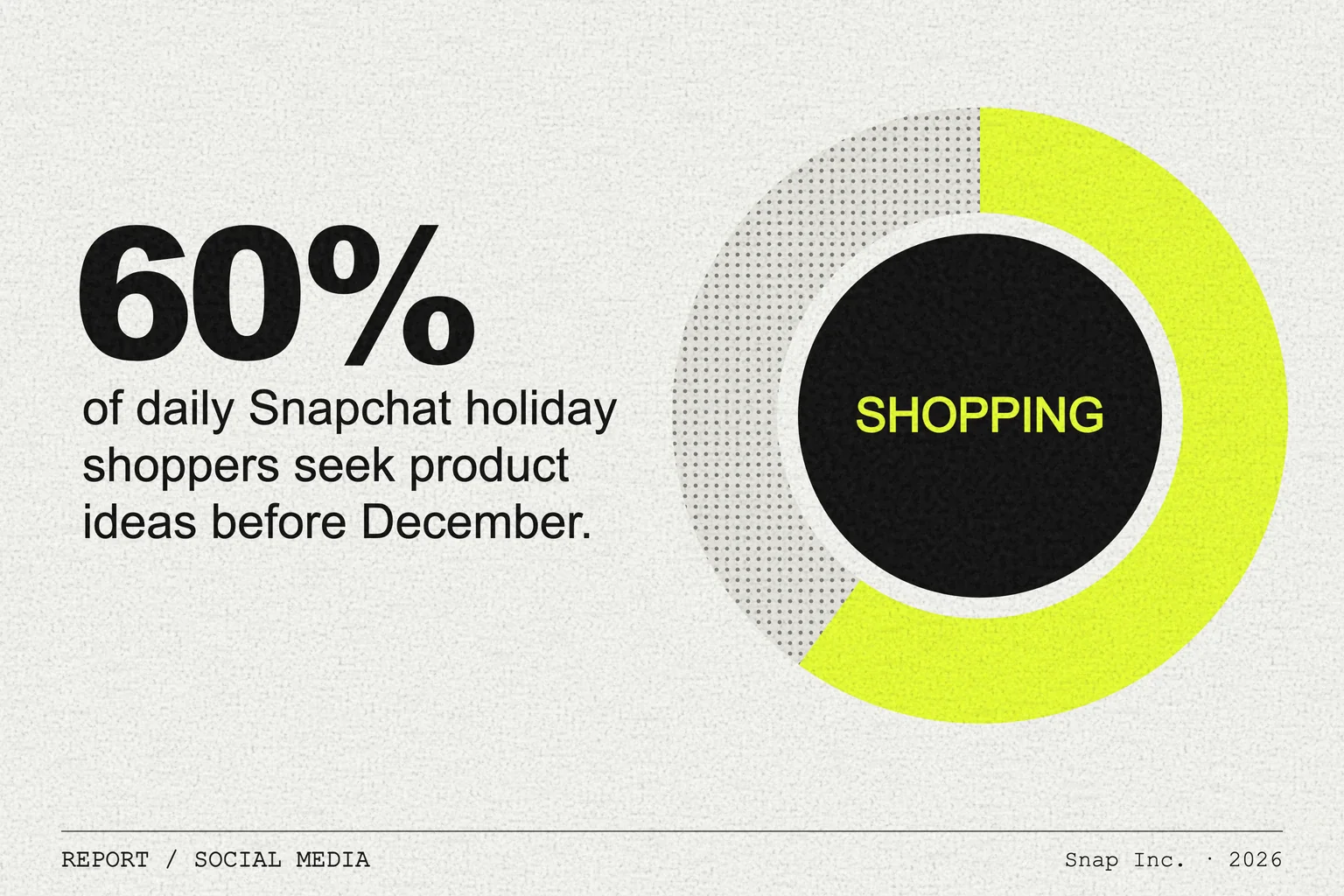
Snapchat's 2026 holiday guide: shopping decisions happen in the chat
Snap's 2026 holiday guide argues gift decisions are made in private chats, citing Snap-commissioned research on early planning, higher spend and shopping after Christmas.