D&AD 2026: the cost of creative shortcuts.
D&AD’s full AI report examines originality, agency pricing, junior training and leadership.
By Brief & Butter · Nov 3, 2026Research publisher: D&AD
D&AD’s 2026 AI & Creativity Report argues that faster production has made creative judgement more valuable. The Cost of the Shortcut examines what agencies risk losing when they automate creative tasks without rethinking how people learn, make decisions and charge for their work.
Published on 18 August 2026 and sponsored by Shutterstock Studios, the 37-page report combines practitioner interviews, D&AD Awards data and external research. This review draws on the full report.
What the research covers
The study includes 197 conversations with creative directors, founders, strategists, producers and lecturers across 60 cities and 30 countries. Conducted from April to June 2026, the interviews lasted about 25 minutes each, totalling 82 hours. D&AD worked with BRAINSTRUST and used Juno, an AI interviewer.
A separate analysis covers 10,118 entries across all 46 categories of the 2026 D&AD Awards, using submissions as of 27 May. The comparison year, 2025, includes 11,637 entries. These are distinct evidence bases: practitioner perspectives and award-entry data.
AI use is growing in award entries
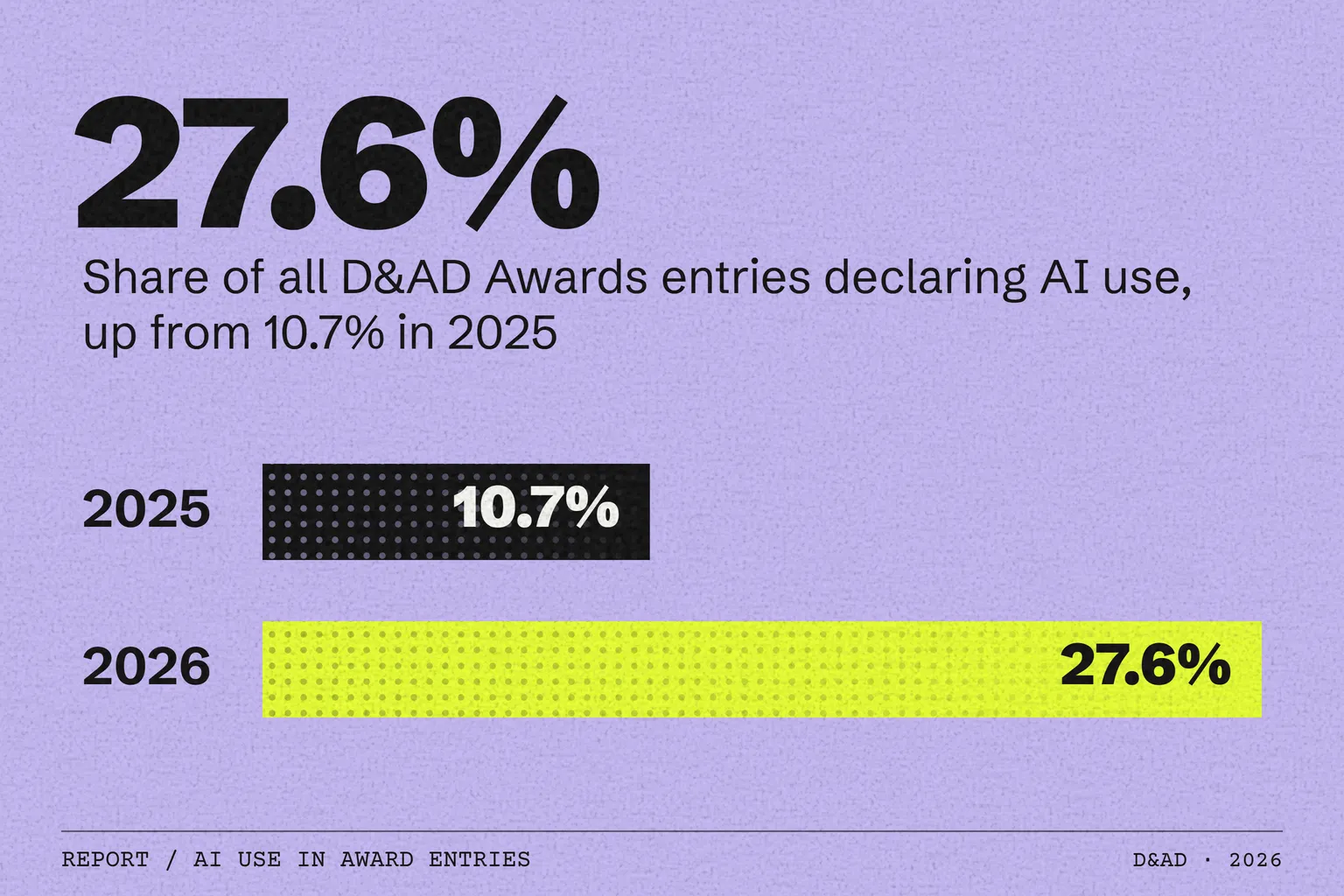
202627.6%
202510.7%
The share of entries declaring AI rose from 10.7% in 2025 to 27.6% in 2026. Those percentages refer to all entries in each year’s dataset, not the creative industry as a whole.
Within the AI-declaring work, generative AI accounted for 56.2% of entries and 44.7% of Pencil winners. These figures describe two different groups; 44.7% is not the win rate for generative-AI entries. The report does not give the exact counts behind those two percentages, and the comparison alone cannot establish that AI improves or reduces creative quality.
Six findings for creative teams
- Originality depends on judgement. AI can produce competent work quickly, but the report warns that default outputs tend towards the familiar. Taste, cultural understanding and a clear creative intention remain essential to making something distinctive.
- Time saved needs a purpose. Faster execution can become a reason to produce more versions. D&AD argues that teams should deliberately reserve some of that time for research, experimentation and deeper thinking.
- Pricing has not caught up. About 70% of the study’s participants reported no change in fees or pricing models. The report challenges agencies to account for the value of decisions, strategy and intellectual property when production takes fewer hours.
- Junior tasks were also training. Research, first drafts, layouts and repeated revisions helped people learn. Automating them without creating other opportunities for practice and feedback risks weakening the development of future creative leaders.
- Governance needs to become practical. The report calls for clear policies, approved tools, room for controlled experimentation, attention to consent and attribution, and visibility into costs. Unwritten expectations leave teams to make inconsistent decisions.
- Leaders need direct experience. Those setting AI strategy need to understand the tools through use and take responsibility for the consequences. The report places accountability for creative standards and learning with leadership.
What this means for agencies
Our editorial reading is that adoption should be judged by the work it enables and the skills it develops. For a creative team, that suggests four practical checks:
- Specify which decisions require human review, including the idea, cultural relevance and final execution.
- Agree how time saved will support exploration and craft.
- Give junior staff structured practice, feedback and responsibility as routine tasks change.
- Review pricing and AI policy together so promised value, production costs and responsibilities are clear.
These are Brief & Butter’s suggested applications of the report, not measured outcomes. The research is global; it does not establish a separate result for GCC agencies.
How to read the numbers
The interviews provide practitioner perspectives, while award entries represent work submitted to D&AD. Neither is a representative census of the creative industry. Declared AI use depends on what entrants report. Other studies cited in the PDF have their own samples and methods and should not be treated as part of the 197 interviews.
Download the full report
Get the full D&AD AI & Creativity Report 2026. The English PDF is free from D&AD; complete the publisher’s registration form to receive the download link by email.
More stories.
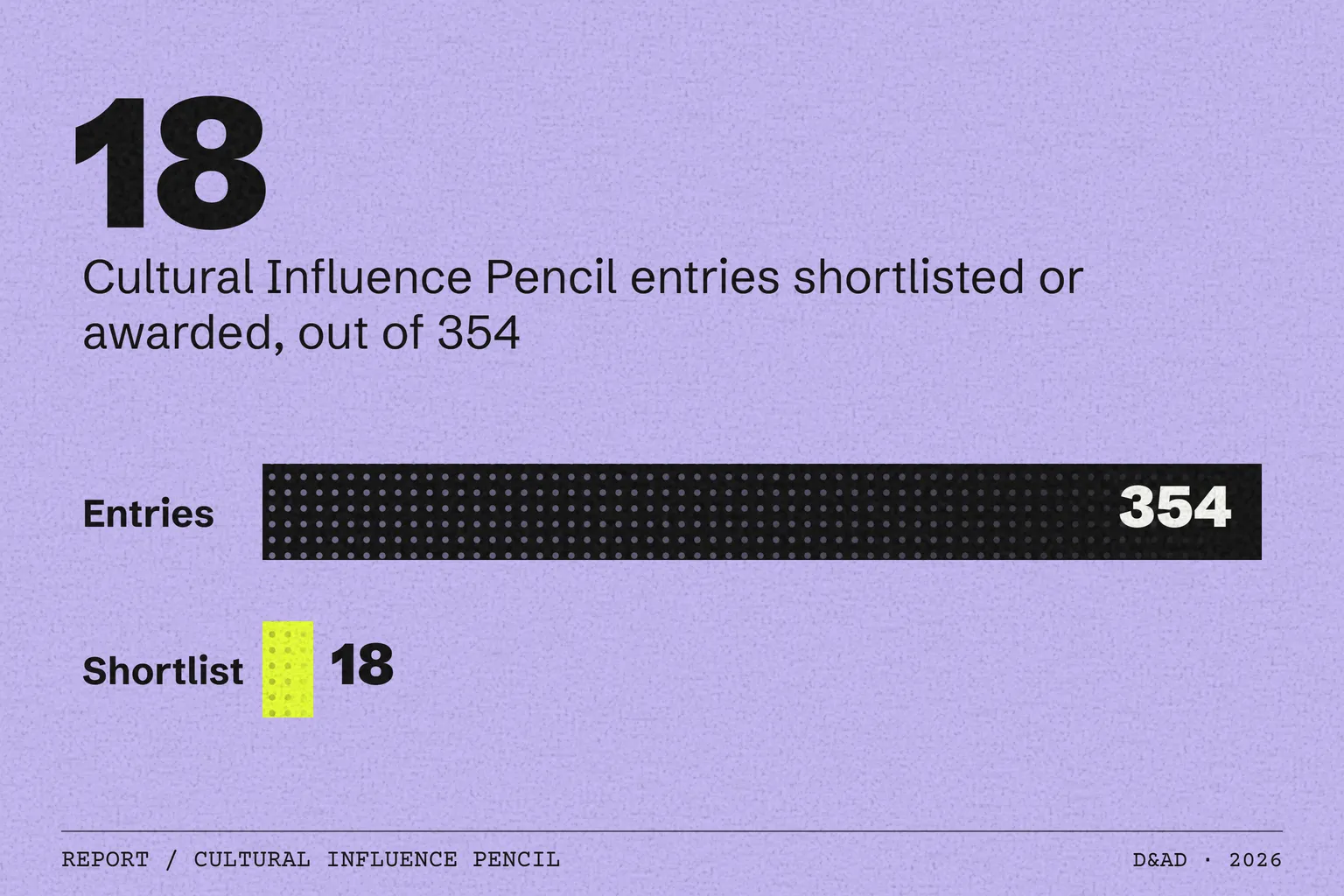
D&AD Trend Report 2026: rules and limits become the starting point for award-winning ideas
D&AD's Trend Report 2026, drawn from more than 50,000 Awards entries, finds constraint-led ideas surging, with a Saudia baggage idea among its examples.
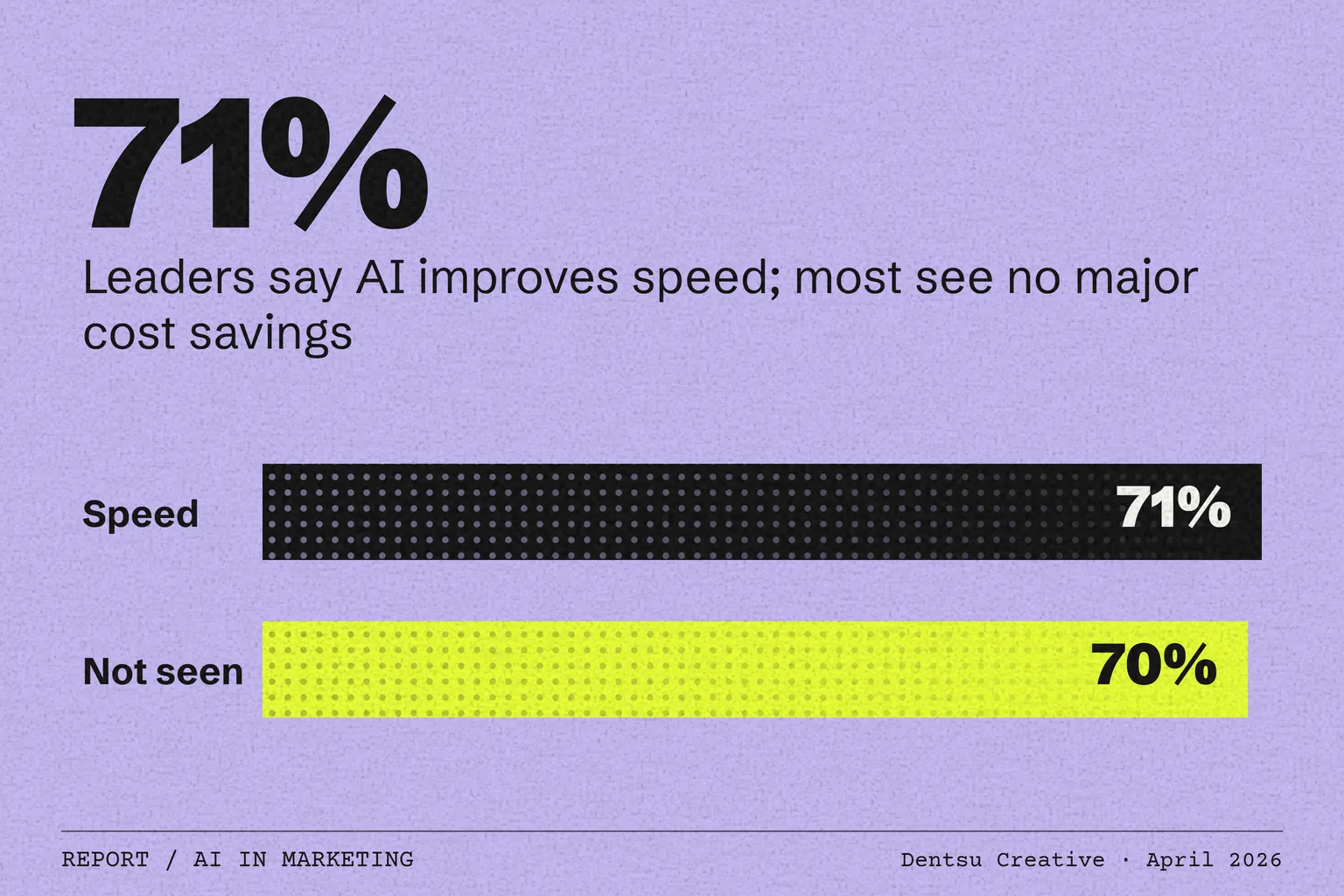
Dentsu CMO report: AI speeds up marketing, but major cost savings remain elusive
Dentsu’s survey of 1,950 senior marketing decision-makers finds faster delivery with AI, but limited major cost efficiencies. Saudi Arabia and the UAE were not surveyed.
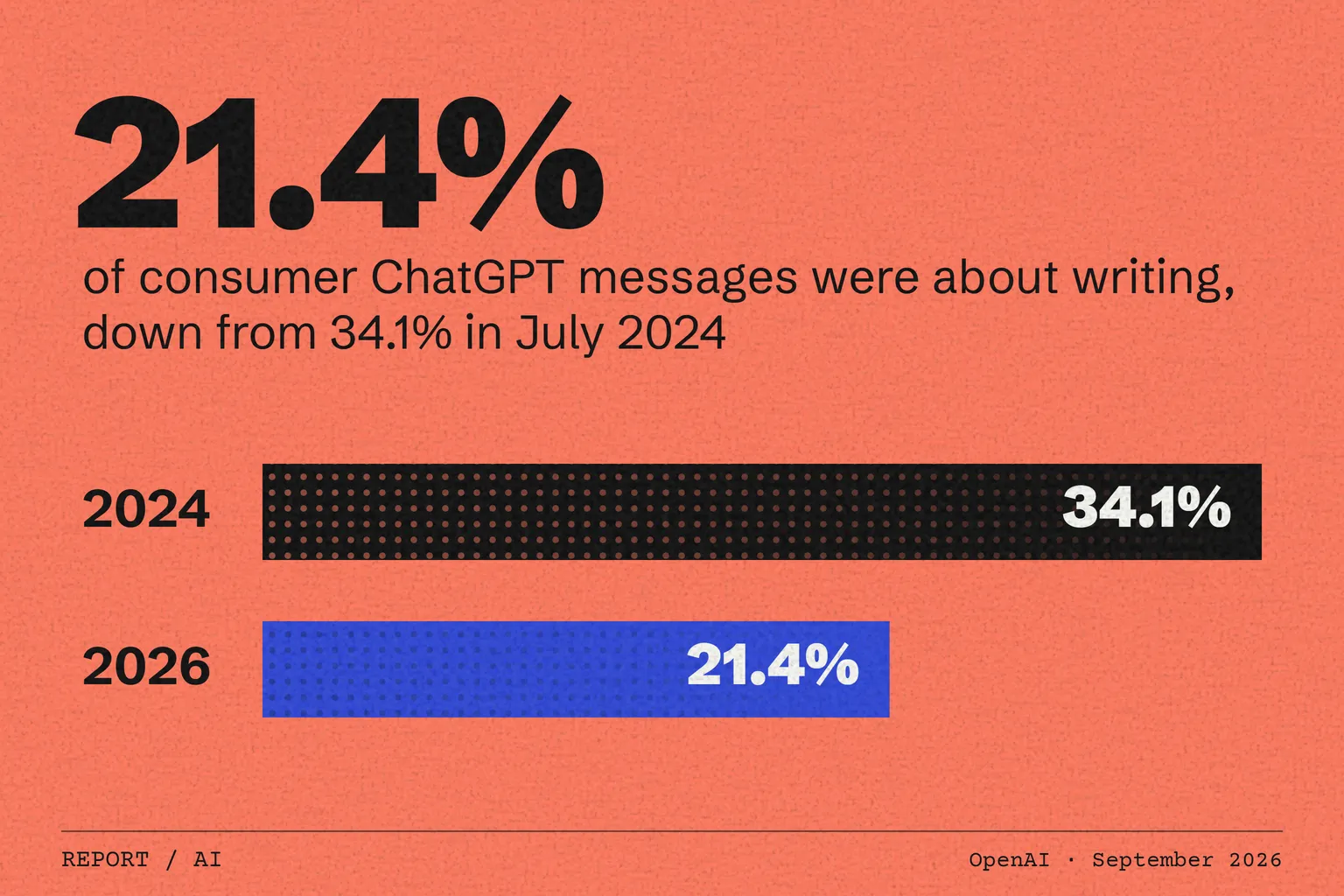
OpenAI Signals 3.0: ChatGPT work use spreads across 165 tasks as writing falls to 21%
OpenAI's new Signals data maps ChatGPT work use to 165 activities in nearly 100 countries, as writing drops and information and image requests grow.